

Application and Prospects of Turning and Milling Combined Processing Technology in the Aviation Industry
In 2010, Chen Guowen published a paper on the future prospects of turn-milling composite processing in "Aviation Precision Manufacturing Technology". It has been 16 years since then. The turn-milling composite processing technology proposed in the paper is no longer a "prospect" for the application of turn-milling composite processing technology in the aviation industry. It is an indispensable core competitiveness in the field of aviation manufacturing. It condenses the process that originally required multiple machine tools and multiple clampings into one piece of equipment. The efficiency improvement and accuracy improvement brought about by it are directly related to the performance and safety of the aircraft.
The inevitable path from stand-alone to composite
In the past, when processing an aerospace part, it often had to be transferred back and forth between lathes, milling machines, and drilling machines. Take the turbine disc of an engine as an example. It has both a turning surface with rotating characteristics and a complex cavity that needs to be milled. With traditional processes, repeated clamping and alignment, turning and milling combined processing will not only take a long time, but also the accuracy is difficult to guarantee.
Around 2010, domestic aviation manufacturing companies began to introduce five-axis turning and milling composite machining centers. This kind of equipment combines the turning spindle and the milling spindle, and can complete all processes in one clamping. The large number of complex thin-walled parts in aircraft structural parts is the main beneficiary of this technology.
Double breakthrough in accuracy and efficiency
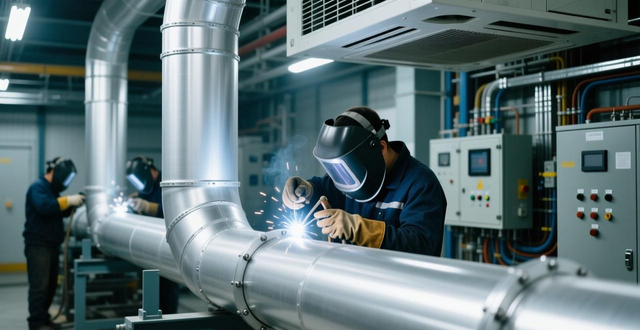
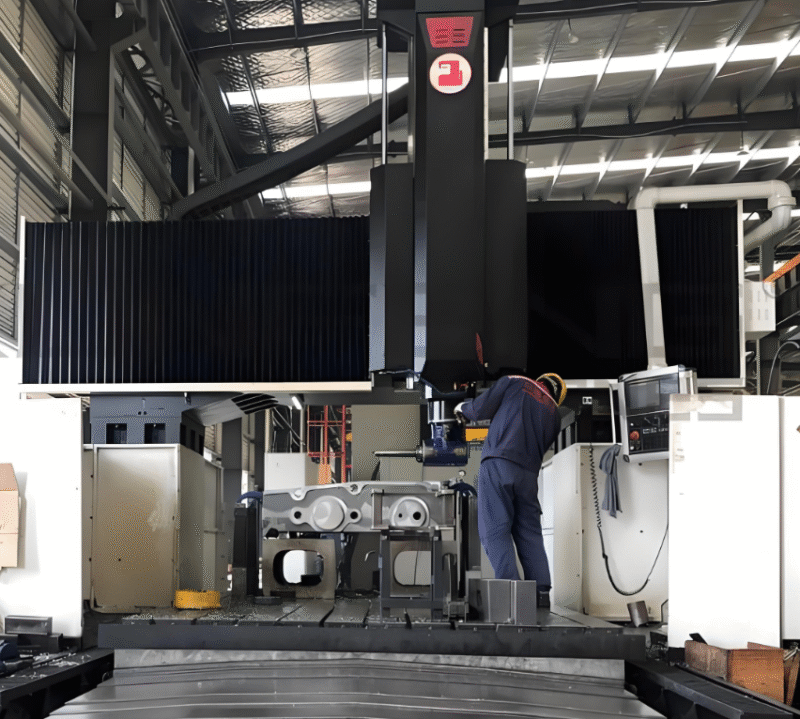
Key components such as blades and casings in aero engines have extremely high requirements for dimensional tolerances and surface integrity. Turning and milling combined processing eliminates the accumulated errors caused by multiple positionings by reducing the number of clampings. Like processing titanium alloy blisks, all turning, milling, drilling and other processes from bar to finished product can be completed on one piece of equipment.
![图片[1]-Application And Prospects Of Turning And Milling Combined Processing Technology In The Aviation Industry-Dalian Fuhong Machinery Co., Ltd](/wp-content/uploads/2026/03/1773605549252_0.png)
The advantage in terms of time and cost is even more prominent. In a technical transformation project carried out in 2015 by a factory owned by AVIC, after the application of turn-milling combined processing technology, the production cycle of a certain type of landing gear parts was shortened from the original three weeks to less than one week. In addition, tool costs and manual intervention have also been significantly reduced.
Material challenges spur process innovation
High-temperature alloys, titanium alloys and other difficult-to-machine materials are widely used in the aviation field. These materials are easy to harden during cutting, and tool wear is extremely serious. Turning and milling combined processing can adopt the flexible strategy of "turning instead of milling" or "milling instead of turning", just like using milling to process titanium alloy rotary parts, which can effectively control the temperature during cutting.
For laminated structures of composite materials and metals, such as the joints of aircraft wings, the turning and milling composite center can also perform drilling and countersinking operations with one clamping, preventing delamination and burrs. This kind of process flexibility is difficult to compare with traditional single-function machine tools.
Equipment localization process accelerated
By that time in 2010, China mainly relied on imports for high-end turning and milling composite machining centers. Equipment was imported from countries such as Germany, Switzerland, and Japan. The prices were high and the maintenance cycles were long. Domestic manufacturers, represented by Dalian Kede and Jinan Second Machine Tool, have achieved self-development of five-axis linkage turning and milling compound machine tools in recent years.
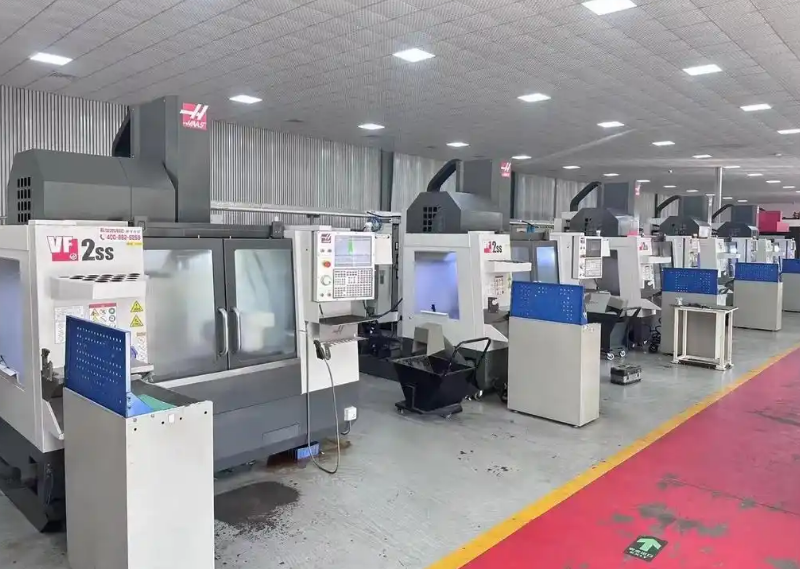
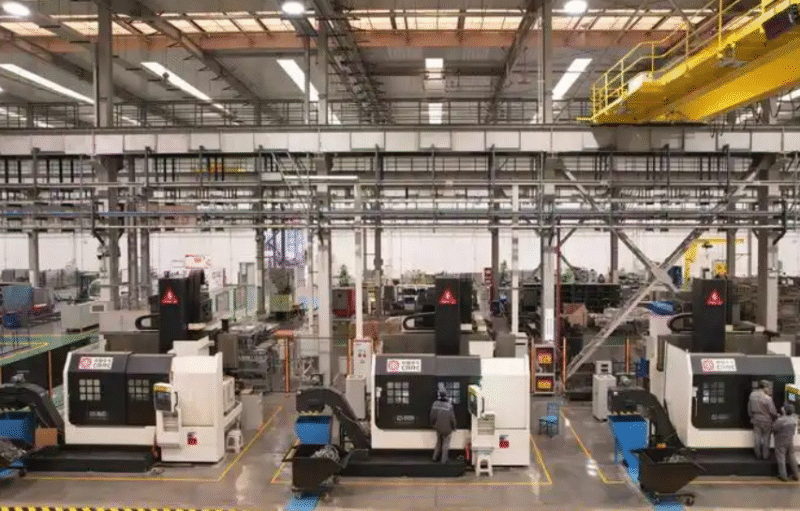
In 2023, at the Beijing Machine Tool Exhibition, many domestic companies exhibited large-scale turning and milling composite centers. This machining center is used for aero-engine casing processing. Its key indicators such as spindle speed and repetitive positioning accuracy are close to the international advanced level. The procurement cost is more than 30% lower than imported equipment. This provides an equipment foundation for the independent control of the aviation manufacturing industry.
![图片[2]-Application And Prospects Of Turning And Milling Combined Processing Technology In The Aviation Industry-Dalian Fuhong Machinery Co., Ltd](/wp-content/uploads/2026/03/1773605549252_1.png)
Deep integration of digitalization and intelligence
Today's turn-milling combined processing is not just the integration of equipment, it is also a key node in the digital production line. With the connection with CAM software and manufacturing execution systems, the three-dimensional model of aerospace parts can directly generate processing codes . The future outlook for turn-milling combined processing can also monitor tool wear and cutting status in real time.
When Yu Chengfei Company was engaged in the production of certain drone components, it built a flexible manufacturing unit with turning and milling composite facilities as its core component. This unit was equipped with an automatic logistics robot to achieve 24-hour unmanned operation. The sensor installed in the equipment can issue an early warning before the spindle overheats or cutting vibration occurs, thereby preventing the occurrence of batch waste.
The future will be bigger, more refined and softer.
As the production capacity of new-generation civilian airliners like the C919 gradually ramps up, and as the next-generation fighter jets are developed, the demand for integrated molding of large structural parts continues to increase. In the future, centers used in turning-milling composite processing will develop towards a larger processing range, higher speeds, and higher load-bearing capacity to meet the processing needs of the overall fuselage frame.
At the same time, for the aviation maintenance market with small batches of single parts and multiple varieties, modular and reconfigurable turning and milling composite equipment will also become a trend. Maintenance companies do not need to purchase special machine tools for each type of parts. By replacing functional modules, they can adapt to the repair tasks of different types of parts, which will significantly reduce operating costs.
After reading this article, do you also feel that turning-milling composite technology is one of the key indicators for measuring a country’s aerospace manufacturing level? In your eyes, what will be the biggest breakthrough in this technology in the next ten years? Welcome to share your views in the comment area, like it and forward it, so that more people will know the sophistication and wisdom behind aviation manufacturing.





暂无评论内容