


What are the packaging requirements for electrolytic copper plates? How does it ensure transportation safety?
Electrolytic copper plates, which are the basic materials of industrial production, have a direct relationship with their final quality and value during the entire journey from the factory to the time of being put into use. Every detail of packaging and transportation is directly related to its final quality and value. Any negligence will most likely lead to surface scratches, moisture oxidation, or even structural deformation, which will in turn bring economic losses and production delays to downstream companies.
Scientific selection of packaging materials
When selecting packaging materials, the first criterion to follow is sturdiness and protection. Galvanized steel sheets or high-strength aluminum alloys are widely used, and both of them can effectively withstand external impacts. They also have anti-rust properties. When facing export or shipping scenarios, the materials also need to pass salt spray testing to ensure that they maintain a stable state in a humid and salty environment.
The single weight of the copper plate and the number of stacked layers are the basis for accurate calculation of material thickness. For example, the single weight of a large copper plate is 2 tons. The thickness of such side plates is generally not less than 1.2 mm. The internal buffer layer, including metal, is also very important. High-density polyethylene foam or rubber gaskets can absorb vibration energy to prevent the corners of the copper plate from being dented due to collisions.
Internal protection and surface treatment
Its electrical conductivity and subsequent processing will be directly affected by the surface finish of the copper plate. During packaging, neutral anti-rust paper or special plastic separators should be inserted between each copper plate. This material does not contain sulfide and chloride riveted welding parts , so as to prevent chemical corrosion. In areas with high humidity, vapor phase rust inhibitors will also be placed to actively build a protective layer in the confined space.
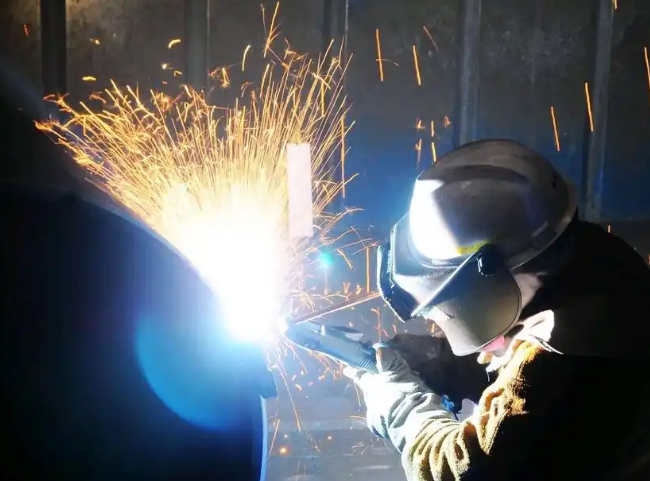
![图片[1]-What Are The Packaging Requirements For Electrolytic Copper Plates? How Does It Ensure Transportation Safety?-Dalian Fuhong Machinery Co., Ltd](/wp-content/uploads/2026/02/1770754134932_0.png)
For high-precision copper plates, such as the electrolytic copper foil used for circuit boards, the packaging is almost up to clean room standards. Vacuum lamination technology is used to completely seal the copper plates in composite films, which can not only isolate the air but also prevent physical contact. Operators must wear cotton gloves to prevent hand sweat from directly touching the metal surface.
Packaging structure design and sealing
Committed to a tight fit and stable load-bearing packaging structure, the design should be carried out according to the dimensions of the copper plates. For example, for a plate type with a width of 1200 mm and a length of 3000 mm, the distance between the inner walls of the packaging box will be set within a 5 mm tolerance range to eliminate the shaking space during transportation. The reinforcing ribs are welded inside the box to form a criss-crossing support frame in a tic-shaped shape.
The final step to prevent moisture and dust is sealing. The large metal box is sealed with continuous welds. After welding, the air pressure is tested, and elastic sealant is applied to the joint to enhance the waterproofness. The door uses multi-point locks and rubber seals to provide double protection to ensure the airtightness of the entire logistics process.
Identity management and information traceability
The foundation for the smooth development of logistics efficiency and quality management is a clearly presented logo. The surface of the packaging should be paint with waterproof and light-fast properties, or a firmly affixed label, and the core information should be clearly marked, including the specific brand, such as T2. What are the packaging requirements for state-of-the-art electrolytic copper plates? How does it ensure transportation safety? , like M state or Y state, gross weight and net weight, the implementation standard is GB/T 467-2010, production batch number and QR code.
This identification system is connected to the Internet of Things. By scanning the QR code, customers can trace all the production data of the batch of copper plates, including electrolytic tank numbers, factory inspection reports and transportation tracks. This situation is not only conducive to warehouse management, but also provides tamper-proof data link evidence for quality disputes.
Transportation reinforcement and loading and unloading specifications
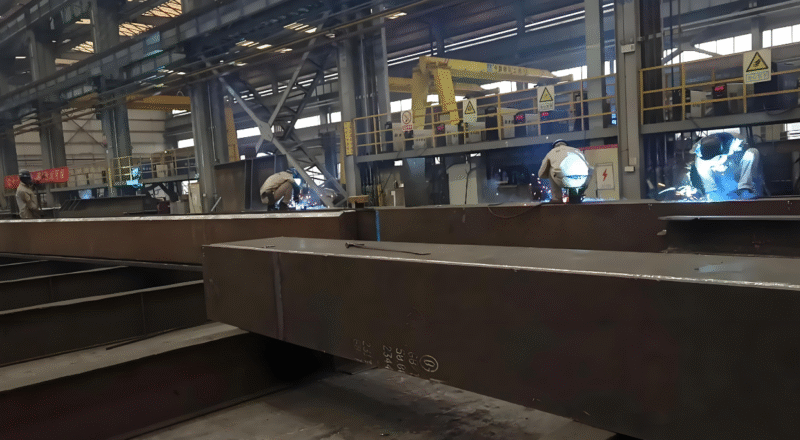
![图片[2]-What Are The Packaging Requirements For Electrolytic Copper Plates? How Does It Ensure Transportation Safety?-Dalian Fuhong Machinery Co., Ltd](/wp-content/uploads/2026/02/1770754134932_1.png)
Long-distance transport, especially sea transport and cross-country rail transport, can encounter constant vibration challenges. After the goods are packed into boxes, steel wire ropes or high-strength webbing must be used to cross-tie the box and the bottom plate of the transport vehicle. The pre-tightening force applied will generally not be less than 5,000 Newtons. Wooden supports are also used inside the container to close the gaps.
For the loading and unloading process, it must meet the requirements of mechanization and standardization. Among them, a bridge crane equipped with nylon slings or an electromagnetic chuck should be used, and the electromagnetic chuck needs to be equipped with an anti-falling protection device. It should be very strictly prohibited to use wire ropes to directly contact the packaging and transportation of corner riveted parts . For transport vehicles, the floor must be flat and clean, and there must be no sharp objects such as welding slag. If necessary, a rubber cushion must be laid.
Environmental control and risk response
In transportation, climate is a risky factor that cannot be controlled. For shipping , the packaging and transportation of riveted and welded parts require a container desiccant with a hygroscopicity rate of up to 300% inside the container. The amount of desiccant is calculated based on the number of days of the voyage. When passing through sea areas with high temperature and humidity, the shipping company can be required to place the container in a place with poor ventilation below the deck to avoid direct sunlight, which can cause "container rain".
For transportation conditions in the north in winter or transportation conditions in high-altitude areas, low-temperature brittleness must be avoided. Packaging materials should maintain toughness in low-temperature environments, and choose low-temperature-resistant steel and plastics. At the same time, coordinate transportation times, try to avoid transfer loading and unloading during extreme weather conditions, or select special transportation vehicles with constant temperature equipment.
When a copper plate comes off the production line, its packaging and transportation are actually a precision-designed protective project. When your industry receives such important raw materials, what are the packaging or transportation problems that you most often encounter? You are welcome to share your experience and explore more optimized solutions together. If this article has inspired you, please support it by giving it a like.




暂无评论内容