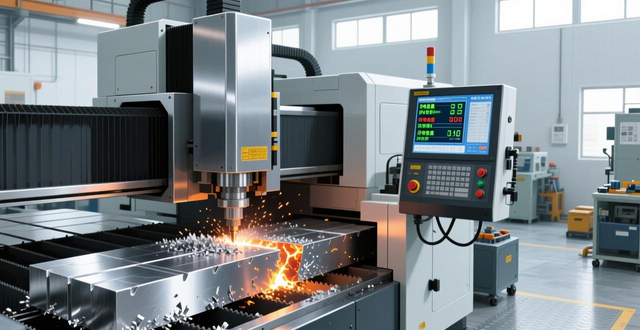


Common problems and solutions for CNC wire cutting aluminum parts
The processing of aluminum parts by CNC wire cutting may seem ordinary on the surface, but in fact there are many technical traps hidden. Common problems and solutions for CNC wire cutting processing of aluminum parts. If you are not careful, the workpiece will be scrapped and the cost will soar. Especially in a high-efficiency production environment, problems such as wear of the feed block, frequent wire breakage, and deformation of the workpiece often give operators a headache.
Abnormal wear of the feed block
During the processing of aluminum parts, a large number of sticky debris will be generated. These debris are extremely easy to adhere to the molybdenum wire, and will be brought into the contact area between the feed block and the molybdenum wire due to the high-speed movement of the molybdenum wire. The feed block is generally made of carbide. However, the molybdenum wire with aluminum oxide particles adhered to it is like an abrasive belt in high-speed motion, which can quickly grind deep grooves on the surface of the feed block.
When the wear groove grows to a certain depth, the wire path and tension stability of the molybdenum wire will change. What's more serious is that the mixture of aluminum chips and abrasive grains may fill the grooves, causing the molybdenum wire to get stuck there instantly and break. This not only interrupts the processing, but also frequently replaces the feed block and molybdenum wire, which directly increases the production cost and affects the continuous operation efficiency.
Problems with broken wires during processing
The direct cause of wire breakage often comes from the groove wire jam that occurs after the feed block is worn. The conductive block of aluminum parts made of soft wire cutting is worn , and the chip removal is not smooth. The aluminum oxide formed at high temperature has a high hardness, which intensifies the impact on the feed. Due to the double wear of the block and the molybdenum wire, once the groove is formed, the molybdenum wire will continue to rub against the edge of the groove during reciprocating motion. During this process, the diameter of the molybdenum wire will slowly become thinner, and its tensile strength will also decrease until it finally breaks.
![图片[1]-Common Problems And Solutions For CNC Wire Cutting Aluminum Parts-Dalian Fuhong Machinery Co., Ltd](/wp-content/uploads/2026/02/1770746894917_0.png)
Another key factor is the setting of processing parameters. For thicker aluminum parts, if the discharge energy and coolant conditions do not match, it will cause the local temperature of the discharge point to be too high, which will further intensify the melting and adhesion of aluminum chips. Especially when the thickness of the workpiece exceeds 40 mm, after several hours of continuous processing, the wear of the contact surface of the feed block will become extremely serious, and intervention and adjustment must be made at this time.
Feeder block maintenance and adjustment
An effective way to extend the life of the feed block is to regularly rotate its contact surface. In actual operation, you can set a time interval, such as after 8 hours of processing, rotate the feed block 90 degrees to allow the unworn surface to contact the molybdenum wire. A feed block generally has four usable sides, which can be used alternately in order to greatly extend its overall service life.
When wear grooves appear on all four sides of the feed block, it will not be scrapped as soon as they appear. A 1 to 2 mm thick metal gasket can be placed on one side of its base next to the molybdenum wire sampling line. In this way, the entire feed block will be slightly offset to the side, causing the molybdenum wire contact point to move to a new position, as if a new working surface were obtained. This is a common cost-saving technique in workshops.
Workpiece deformation control
The root cause of the deformation of aluminum parts after wire cutting is the release of residual stress inside the material. During the previous forging, cutting or heat treatment process, uneven stress distribution was formed inside the workpiece. Wire cutting cuts the material over a large area, destroying the original stress balance, causing the shape of the workpiece to change slowly over time, thus affecting the final dimensional accuracy.
These two aspects before processing and during processing are the directions to control deformation. For those key parts with high precision requirements, stress relief annealing before cutting is an effective method. Heating aluminum parts to a specific temperature, maintaining it for a certain period of time, and then cooling it slowly can significantly reduce internal residual stress. When arranging the process, rationally configuring the cutting path and reserving connection points can also constrain deformation.
Trajectory distortion and size compensation
The machining trajectory is distorted. In addition to problems with the mechanical accuracy of the machine tool, the diameter change caused by molybdenum wire loss is the main reason. For example, the diameter of a new molybdenum wire is 0.18 mm. However, after long-term processing, its diameter may only be 0.125 mm due to wear. If the processing compensation value is not adjusted accordingly, the size of the cut workpiece will definitely deviate, causing the accuracy to exceed the tolerance range.
Therefore, when continuous processing for a long time or precision processing is carried out, a micrometer must be used regularly to measure the actual diameter of the molybdenum wire. Based on the actual measured value, the compensation value of the electrode wire radius is modified in the CNC system in time. This step may seem small, but it is a key link to ensure the dimensional accuracy of the workpiece, especially when processing multiple pieces on top of each other or processing mold mating surfaces.
Comprehensive process optimization strategy
To solve the problem of wire cutting of aluminum parts, systematic optimization is needed. First, it is necessary to choose a coolant specifically suitable for aluminum processing to improve chip removal and cleaning capabilities. The conductive block of the second-line cutting aluminum parts is worn , and the electrical parameters need to be adjusted to reduce the single pulse energy while ensuring the cutting efficiency, thereby reducing the production of sticky alumina. In addition, it is also very important to clean the guide wheel and the feed block area regularly to maintain the smooth flow of the wire transport system.
It is extremely necessary to establish preventive maintenance records. It is necessary to record the time of each wire breakage, the adjustment period of the feed block, and the molybdenum wire loss data, and the corresponding workpiece thickness and material batch must be recorded. With the help of data analysis, the best process window that best suits the current equipment and materials can be found. In order to achieve stable, efficient and low-cost batch processing.
During your actual work , the conductive blocks of wire-cut aluminum parts were worn out . What was the most difficult problem in wire-cutting aluminum parts that you encountered, and how did you finally overcome it? You are welcome to share your experience in the comment area. If you find this article helpful, please like it to support it.




暂无评论内容