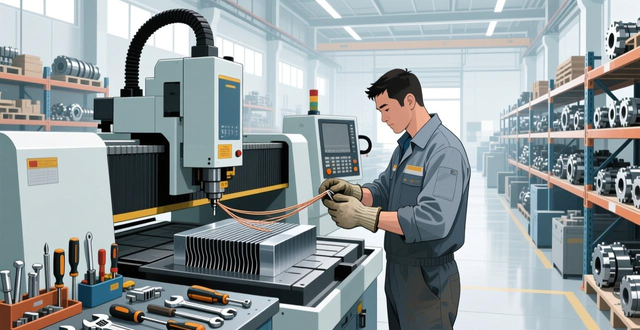


Share some tips on parameters, operations, and liquid preparation of wire-cut aluminum.
During wire cutting of aluminum materials, operators often encounter the trouble of rapid loss of conductive blocks and frequent wire breakage, which will directly affect processing efficiency and cost. If you master the correct parameter settings, operating methods and working fluid management methods, this situation can be significantly improved.
Setting of pulse electrical parameters
When processing aluminum, the pulse width should not be set too wide. Excessive pulse width will cause excessive discharge energy and wear of the conductive block of wire-cut aluminum parts , producing relatively large-sized alumina particles. These particles stick easily to the running molybdenum wire.
The pulse interval also plays a key role. If the interval is too small, the heat and debris generated by the discharge will not be eliminated in time. It is recommended to appropriately increase the no-load voltage, and at the same time use a narrower pulse width and a slightly larger pulse interval to reduce adhesion.
Practical tips in operation
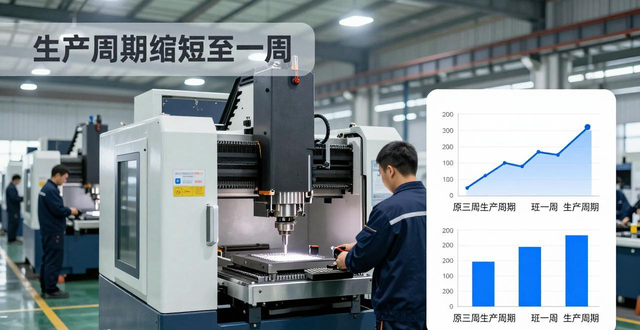
An effective method is to add a damp sponge to the guide groove at the rear end of the bobbin rack. When the molybdenum wire reciprocates at high speed , the conductive block of the wire-cut aluminum part wears and the conductive block of the wire-cut aluminum part wears . There will be mutual friction with the sponge, thereby erasing some oxide residues adhered to the wire.
![图片[1]-Share Some Tips On Parameters, Operations, And Liquid Preparation Of Wire-cut Aluminum.-Dalian Fuhong Machinery Co., Ltd](/wp-content/uploads/2026/02/1770739966426_0.png)
One of the main causes of wire breakage is the wear of the conductive block. The contact point between the conductive block and the molybdenum wire needs to be checked regularly. Once a deep groove appears, the conductive block should be moved immediately. Let’s share the parameters, operation, and liquid preparation tips of wire cutting aluminum to ensure that the contact surface remains flat, which can stabilize the discharge state.
![图片[2]-Share Some Tips On Parameters, Operations, And Liquid Preparation Of Wire-cut Aluminum.-Dalian Fuhong Machinery Co., Ltd](/wp-content/uploads/2026/02/1770739966426_1.jpg)
Selection and proportioning of working fluid
Right now, waterline cutting fluids are the mainstream choice. For the common Liangjie brands in the market, when processing steel parts, the recommended ratio is from 1:10 to 1:20. However, when processing aluminum materials, you can try a thinner concentration.
It will be more economical and efficient to adopt the strategy of replacing it as soon as it is dirty. Why? Because the gel-like residue produced during the processing of aluminum is particularly easy to contaminate the working fluid. Compared with blindly pursuing the life of a single use, it is better to replace the diluted liquid more diligently. In this way, not only can the cutting efficiency be guaranteed, but the overall cost can also be relatively controllable.
Keep the fluid system clean
The cleaning of the working fluid tank is extremely important. You can choose to place a relatively thick sponge at the position corresponding to the water return port, and use it to filter and absorb the small debris and colloidal substances produced during aluminum processing to prevent these things from clogging the pipes and the pump body.
This filter sponge needs to be cleaned or replaced regularly. If it is completely blocked, it will have a serious impact on the circulation flow of the working fluid. At the same time, the uniformity of the water output from the upper and lower nozzles must be adjusted to ensure that the erosion materials in the cutting seams can be smoothly brought out.
Additional preparation for the properties of aluminum
Aluminum, which has good electrical conductivity and is relatively soft in texture, can easily produce a large number of long, soft chips at the moment of discharge. These chips are the culprit of short circuits and secondary discharges, so the conditions for chip removal are more stringent than those for processing steel.
Not only the adjustment of parameters and liquids, but also during programming, you can consider appropriately reducing the tracking speed and adding necessary pauses, thereby leaving more time for chip removal. For thicker aluminum parts, cutting multiple times will have a more stable effect than cutting through at once.
Long-term maintenance and habit formation
Treat aluminum processing as a process that requires special care. It is recommended to create a special aluminum processing equipment file, record every successful parameter combination and problems that occurred, and accumulate your own experience data.
Maintain the habit of checking the concentration and cleanliness of the working fluid used before performing machining operations. After the processing work is completed, the workbench and water tank of the machine tool must be cleaned as soon as possible to prevent aluminum shavings from remaining and causing corrosion to the machine tool components. These small details can extend the overall service life of the equipment.
For workshops that frequently process aluminum parts, do you think it is a more economically feasible long-term solution to set up a wire cutting machine specifically for aluminum cutting? Please share your opinions and practical experiences on this matter in the comment area.




暂无评论内容