


Jinluo Metal has obtained a patent for an adaptive fixture for ultra-precision machining of complex-shaped workpieces to ensure smooth subsequent machining of special-shaped parts.
New breakthroughs have appeared in clamping technology in the field of ultra-precision machining. A recently authorized patent is about the ability to adaptively clamp complex-shaped workpieces. This not only improves processing efficiency in precision parts processing , but also solves the problems of safety and accuracy when clamping special-shaped parts.
Pain points of clamping in complex workpiece processing
In mechanical manufacturing, especially during precision machining, irregularly shaped parts are often encountered. It is difficult for traditional clamps to securely hold such special-shaped parts, and operators sometimes have to take risks and use their hands to assist in fixing. This method not only has safety risks, but also involves uneven clamping strength in precision parts processing , which can easily cause parts to shift or deform during the processing, directly affecting the accuracy and qualification rate of the final product. Especially in manufacturing-intensive areas like Shenzhen, this type of processing demand widely exists in the production of molds, medical devices and precision parts.
Technical principles of adaptive clamping
![图片[1]-Jinluo Metal Has Obtained A Patent For An Adaptive Fixture For Ultra-precision Machining Of Complex-shaped Workpieces To Ensure Smooth Subsequent Machining Of Special-shaped Parts.-Dalian Fuhong Machinery Co., Ltd](/wp-content/uploads/2026/01/1769889809988_0.png)
The key to this patented design is its adaptive clamping module. It does not use traditional fixed jaws, but a set of circular abutment rods that can move independently. When irregularly shaped parts are placed in, Jinluo Metal has obtained a patent for an adaptive clamping fixture for ultra-precision machining of complex-shaped workpieces to ensure smooth subsequent machining of special-shaped parts. These abutments The rods can move individually under the drive of the mechanism until each contact rod can closely fit different sides of the part's outline. Such a multi-point contact method is like using many fingers to hold an object from different directions at the same time. It can evenly distribute the force generated by clamping and effectively prevent the part from indentation or deformation due to excessive local force.
The specific composition of the modular structure
The device mainly relies on four major modules to work together. The fastening module provides the final locking force. The shell serves as the main frame part. The convex plate is used for positioning and support. The most critical clamping module covers the circular shaft and the first turntable tool. With the action of rotating the turntable, it can It can drive the movement of the internal mechanism, allowing the group of circular contact rods to extend outward synchronously or asynchronously. This modular design has the advantage of easy maintenance and replacement. Damage to a certain component will not cause the entire fixture to be scrapped, reducing the costs related to the use and maintenance of the equipment.
Advantages compared to traditional methods
Compared with manual hand-holding or relatively simple tooling, the advantages of this set of self-adaptive jig are very obvious. First, it will completely eliminate the risks involved in human hands entering the processing area, which is in line with the requirements of safety production regulations. Secondly, its repeatable positioning accuracy in clamping is relatively high. High, the position of the same batch of parts is almost the same each time they are clamped, which ensures the consistency of processing. Since the beginning of 2024, the manufacturing industry has become increasingly demanding intelligent and standardized production, and the market demand for this kind of equipment that can ensure process stability is on the rise.
Improve overall processing efficiency
![图片[2]-Jinluo Metal Has Obtained A Patent For An Adaptive Fixture For Ultra-precision Machining Of Complex-shaped Workpieces To Ensure Smooth Subsequent Machining Of Special-shaped Parts.-Dalian Fuhong Machinery Co., Ltd](/wp-content/uploads/2026/01/1769889809988_1.png)
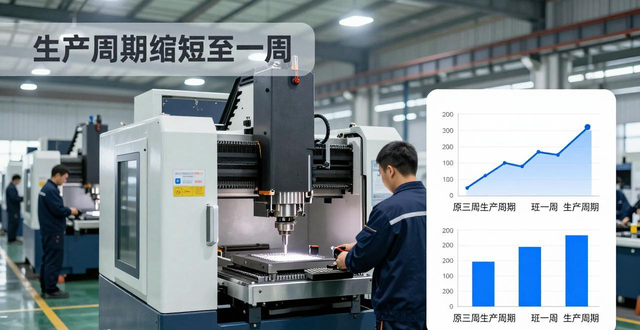
The efficiency improvement brought by this device can be seen in the whole process. It shortens the time for clamping and aligning a single part. The operator does not need to repeatedly adjust the bolts or the pads. Because the clamping is more stable, the machine tool can use higher cutting parameters, which in turn shortens the processing cycle. In addition, it reduces the time required for assembly. Scraping parts caused by unstable clamping also reduces rework caused by unstable clamping. This situation indirectly reduces the production cost of precision parts processing . For patent-holding companies, that is, companies involved in retail and also laying out manufacturing technology, improved efficiency means stronger market competitiveness.
The corporate strategy behind patents
The company that applied for this patent is a retail company established in Shenzhen in 2012 with a registered capital of 5 million. It has 12 pieces of patent information and 6 administrative licenses. This reflects that even if the main business is retail, the company is also seeking breakthroughs through technological innovation, or providing support for the manufacturing links of its supply chain. In a fiercely competitive market environment, accumulating intellectual property rights has become an important strategy for companies to build moats and develop new business directions.
Can this clamping technology, which has the function of automatically adapting to the shape of parts, become a universal solution to solve the problems of small batch and multi-variety precision machining? You are welcome to share your views in the comment area. If you feel that the analysis is enlightening, please like it to support it and share it with more colleagues.




暂无评论内容