

What is riveting?
Many people don’t know that the core secret of sturdy airplanes, cars, and bridges lies in a connection process called riveting.
What is riveting welding
The process of permanently bonding metal parts, that is, riveting, uses molten metal or the use of rivets to connect two or more metal parts. This process is different from bolting. The joint formed is generally irremovable and is integral. It uses high temperature or pressure to achieve a bond between atoms, thereby obtaining extremely high connection strength. It is one of the cornerstones of modern industrial manufacturing.
In essence, this riveting is divided into two categories, one is the welding and riveting processing order platform , and the other is riveting. Welding uses heating to melt and fuse the base material, while riveting relies on the mechanical deformation of the rivets to generate locking force. Both methods can cope with huge tensile, shear and vibration loads to ensure the reliability and safety of the structure during long-term use. They are indispensable technologies for many key equipment.
Main process types
Commonly seen welding methods include arc welding, gas shielded welding and laser welding. Arc welding uses arcs to generate high temperatures, and gas shielded welding uses gas to block air to avoid oxidation. What is riveting welding? Laser welding uses high-energy beams to achieve precision processing. Each method has its own suitable material thickness, production efficiency and cost calculation factors. The factory will select it according to the needs of the specific product.
The riveting process is divided into solid rivets and blind rivets. Solid rivets need to be struck from both sides, while blind rivets only need to be operated from one side. The tool is used to pull off the core rod to allow the rivet to expand. In occasions where the assembly space is limited, such as aircraft skin installation, blind rivets are widely used, greatly improving assembly convenience and efficiency.![图片[1]-What Is Riveting?-Dalian Fuhong Machinery Co., Ltd](https://endlfh.com/wp-content/uploads/2025/09/QQ20250829-200803-1-800x679.png)
Process implementation steps
Before carrying out riveting welding, preparation is of extremely critical importance. The operator needs to clean the surface of the workpiece to remove oil stains and oxides, and select matching welding rods or rivets based on the characteristics of the material. For welding, parameters such as current and voltage must be properly adjusted; for riveting, it is necessary to determine the appropriate rivet length and hole diameter. These subtle links will directly affect the final connection quality.
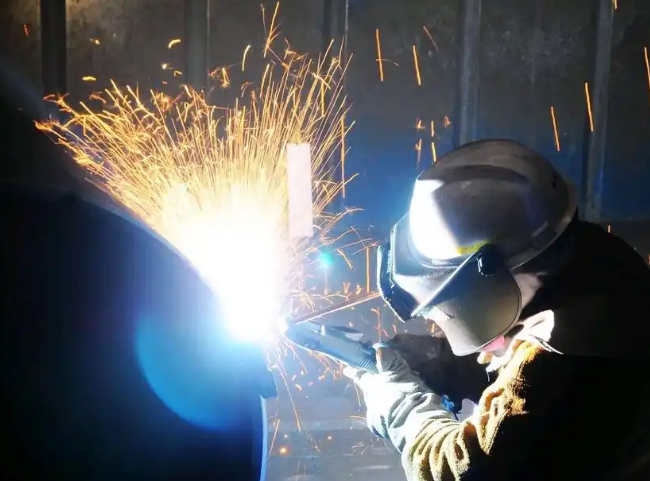
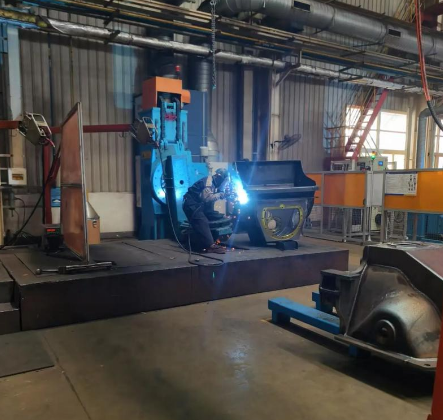
During the actual operation, the welder must hold a welding gun or operate a robotic arm and move along a predetermined path to form a weld; the riveter must use a rivet gun or pneumatic hammer to quickly hit the rivets to form them. After this work is completed, be sure to carefully inspect the connections to see if there are any defects such as cracks, lack of fusion, or loose rivets to ensure that every connection point is flawless.
key advantages
The biggest advantage of the riveting welding process is the strength and sealing of its connection. Welding can fuse different parts into one, and the force will be uniform. Qualified riveting points can withstand alternating loads for a long time without loosening. For example, the hulls of ships and high-pressure pipelines must use this process to prevent leakage or breakage of the riveting welding processing order platform and ensure the safety of personnel and equipment.
This type of process has the ability to connect metals of different materials and thicknesses, and its adaptability is extremely outstanding. It can achieve automated production, like the robot welding station on the automobile production line, which can complete thousands of solder joints accurately and at high speed, ensuring the consistency of product quality in mass production situations, which is difficult to achieve with other connection methods.
Examples of application areas
In the aerospace industry, riveting is widely used in many parts of the aircraft fuselage. Why is this? The reason is that aluminum skin is not suitable for high-temperature welding processes. However, riveting can provide high-strength conditions without damaging the material properties. For the rocket engine, its complex components require the use of special welding technology in order to withstand thousands of degrees of high temperature and strong vibration environment riveting and welding processing order platform . Here, every solder joint is closely related to the success or failure of the mission.
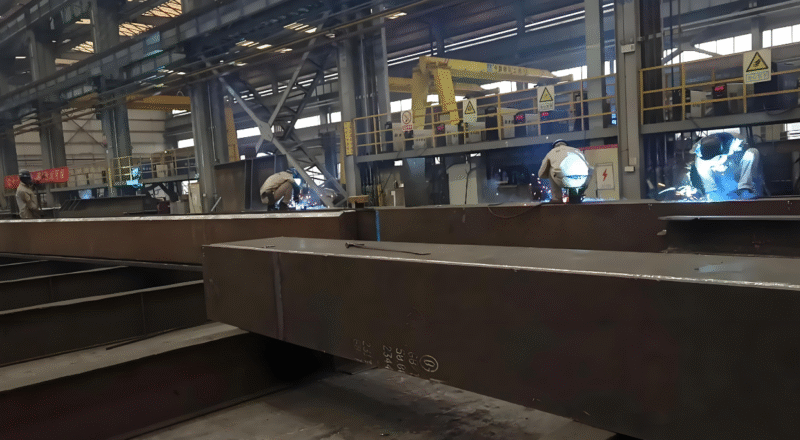
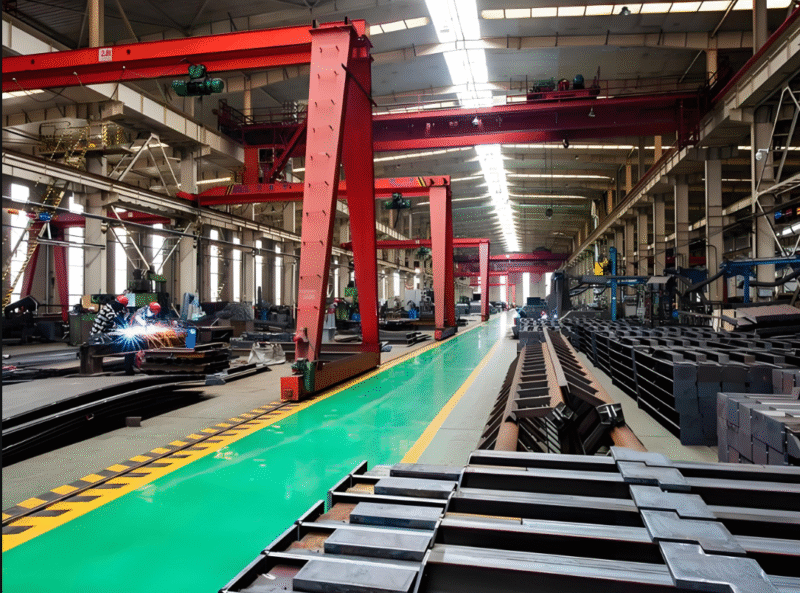
In normal days, the frame and chassis of a car are connected with the help of spot welding robots. Many of the steel beam nodes in the steel structure building we live in use high-strength bolts and are welded together. Even the production lines of steel furniture and electrical appliance shells at home are inseparable from the efficient riveting and welding process, which silently constructs the material world we live in.![图片[2]-What Is Riveting?-Dalian Fuhong Machinery Co., Ltd](https://endlfh.com/wp-content/uploads/2025/07/QQ20250713-202014-800x672.png)
Develop new trends
At present, riveting welding technology is developing in the direction of intelligence and greening. Intelligent welding robots are equipped with visual sensors, which can automatically identify weld seams and adjust parameters. New “green welding” technologies such as friction stir welding have low energy consumption and no smoke, which are more in line with environmental protection requirements. These advances continue to promote the upgrading of the manufacturing industry.
At the same time, advances in materials science have brought new challenges: the increased demand for joining aluminum alloys and composite materials has led to the emergence of corresponding new technologies, such as laser riveting, self-piercing riveting and other new processes. In the future, with the further development of Industry 4.0, the riveting and welding process will be more closely integrated with digital twins and online monitoring to achieve full process traceability and precise control of quality.
In the field of work or life where you are, have you ever noticed which objects or facilities significantly use the riveting and welding process? Has its sturdiness ever left a deep impression on you? You are welcome to share your observations and related stories in the comment area. If you find this article helpful, please give it a like and support.



暂无评论内容