

Nietschweißen und Auflösetechnik gestalten gemeinsam die Zukunft der Fertigung
The next chapter in manufacturing is being written in a double play of material connections and separations
Manufacturing stands at a turning point. Traditional process boundaries are blurring, replaced by the deep integration of multiple technologies. In the midst of this transformation, the combination of rivet welding and dissolution technologies is quietly shaping the future picture of manufacturing. This article looks at how this convergence trend is redefining the manufacturing process and how organisations can prepare for this future.
Technology convergence: paradigm shift from singularity to synergy
Traditionally, in the classification of manufacturing processes, riveting and welding and dissolution technology are in different fields – the former focuses on joining materials, the latter on separating them. However, this boundary is breaking down. The synergistic effect of the two technologies is creating the value of one plus one over two.
In the automotive industry, press riveting (SPR) has been widely used as a mechanically cold-formed joint for aluminium-aluminium and aluminium-steel connections.8 At the same time, an understanding of the inter-material solubility behaviour has become crucial for optimising the joining parameters and improving the reliability of the joints.7 This intersection of knowledge from different technological fields is typical of the future development of the manufacturing industry.
Intelligent transformation: data-driven process optimisation
With the in-depth application of Industry 4.0 technology, the rivet welding and dissolution process is rapidly developing in the direction of digitalisation and intelligence. Taking the research of aluminium alloy unilateral self-punching friction rivet welding process in Shanghai Jiaotong University as an example, the two-stage process is optimized through orthogonal experimental design, and the trend of the test indexes with the change of factors is analysed, so that the optimal process parameters-3 are finally selected.
A similar approach applies to dissolution process optimisation. For example, an efficient dissolution process in the Bohai Oilfield significantly improved dissolution efficiency by finely controlling the three phases of dissolution-4. This data-driven approach to process optimisation will become standard practice for manufacturing companies in the future.
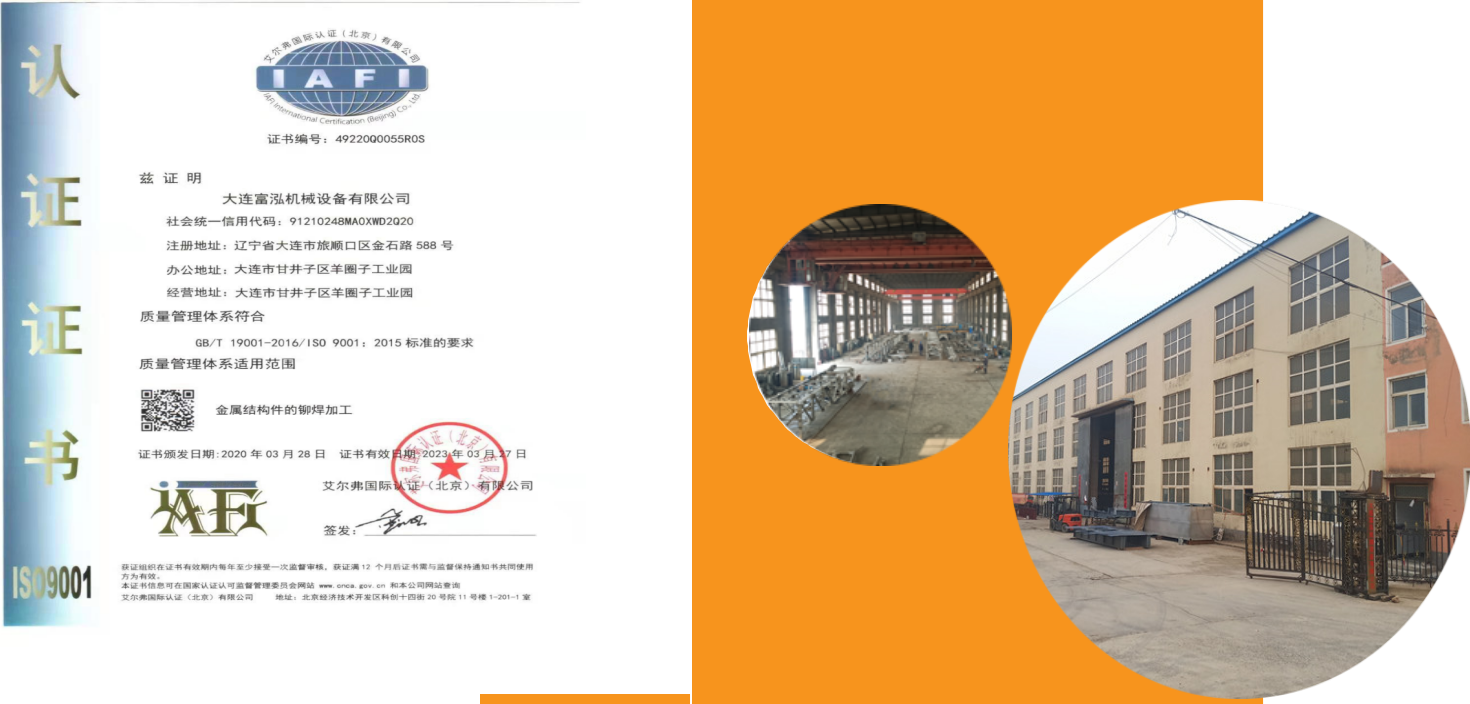
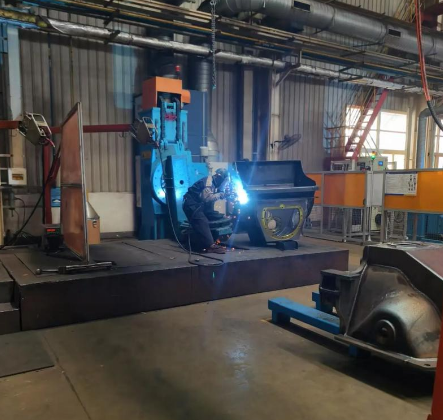
Sustainability: the dual contribution of green manufacturing![图片[1]-铆焊焊接与溶解技术共同塑造制造业未来-大连富泓机械有限公司](https://cndlfh.com/wp-content/uploads/2025/09/QQ20250829-200803-800x679.png)
The combination of rivet welding and dissolution technology offers unique value when it comes to green manufacturing and sustainability:
1. Material efficiency gains
Advanced rivet welding technologies, such as single-sided self-pierce friction rivet welding, reduce material use through optimised joint design-3, while dissolution technologies, such as the polystyrene recycling process, support the circular economy model by converting waste plastics into reusable pellets through solvent dissolution-9.
2. Optimisation of energy consumption
Solid-state joining techniques in rivet welding, such as friction elements, typically consume less energy than conventional fusion welding. And efficient dissolution processes, such as polymer dissolution applied in the Bohai Oilfield, improve energy efficiency by optimising process parameters-4.
Future Application Scenarios
1. Manufacture of multi-material structures
Future product structures will be more multi-material design to fully utilise the performance advantages of each material. In this context, the combination of rivet welding and dissolution technology will provide more solutions for joining dissimilar materials. For example, intermediate layers or transition structures prepared by dissolution technology can optimise the performance of rivet-welded joints.
2. Adjustable connection technology
Based on a deeper understanding of the solubility behaviour of materials, the future may see the emergence of tunable joining technologies – joins that remain strong under certain conditions and can be easily separated under another. Such controllable connections are important for product recycling and reuse.
3. Distributed manufacturing model
Efficient dissolution technologies make the geographically distributed recycling and reuse of materials more feasible-9 while advanced rivet welding soldering technologies support the localised manufacturing model. The combination of these two technologies provides technical support for a distributed manufacturing model.
Corporate Response Strategies
In the face of the trend towards the integration of rivet welding and dissolution technologies, manufacturing companies can consider the following strategies:
Cultivation of interdisciplinary talents: Breaking down the boundaries of traditional specialisations to cultivate complex talents who master both material joining and separation technologies.
Focus of R&D investment: Increased R&D investment in cross-cutting technology areas, especially in cross-innovation of material interface behaviour and processes
Building a co-operative ecosystem: establishing co-operation with universities and research institutes to track the latest technological developments, such as the innovative process of unilateral self-punching friction riveting welding and other innovative processes-3
Digital tool application: introduction of advanced simulation and data analysis tools to optimise process parameters and improve product quality and productivity
Schlussbemerkungen
The integration of rivet welding and dissolution technology is much more than a simple superposition of two manufacturing processes. It represents a new paradigm in the development of manufacturing – from isolated process optimisation to systematic material handling solutions, and from single technology breakthroughs to cross-field collaborative innovation. For manufacturing enterprises, grasping this trend and actively laying out cross technology fields will be the key to taking the lead in future market competition. With the continuous progress of materials science and process technology, this cross-border integration will open up more new possibilities for the manufacturing industry and redefine the way we manufacture products.


暂无评论内容