Author: hfc87

  • Shaoguan Spray Painter Salary And Benefits

    Shaoguan spray painter salary and benefits

    The recruitment market for spray painters, as well as the salary and benefits of spray painter positions, show significant regional differences, as well as obvious industry differences. Knowing these detailed and specific information is extremely important for those who come to apply for a job.

    Cities with concentrated recruitment needs

    According to recent industry data statistics, Chongqing is the city with the largest recruitment demand for spray painters across the country, and its demand accounts for approximately 6.1% of the total. Shaoguan, a city that is an important industrial town, has a developed automobile manufacturing industry and equipment industry, which generates and provides a large number of related jobs. The city closely following Chongqing is Qingdao, whose demand accounted for 3.7%. Qingdao's port economy and home appliance manufacturing and other fields have driven the demand for personnel. Taizhou, Zhejiang Province ranks third with a share of 2.5%. The local private manufacturing industry with active performance is the main source of employment demand for spray painters.

    These data are derived from the summary of public information from major recruitment platforms, which can show the flow trend of talents within a certain period of time. Job seekers can focus on the job markets or mainstream recruitment websites in these cities. Of course, there are limitations in the coverage and update frequency of online data. When actually looking for a job, a comprehensive evaluation should be made based on offline channels.

    Regions with leading salaries and benefits

    In terms of salary level, the median monthly salary of spray painters in Beijing is at the highest level, with a specific value of approximately 9,900 yuan. The capital has gathered a large number of high-end manufacturing companies, precision instrument companies, and special equipment service companies. These companies offer more competitive remuneration for spray painting positions with high technical requirements. Salary levels in Changzhou, Jiangsu and Suzhou are both ranked in the second tier, with their median monthly salary being around 9,500 yuan.

    Among them, the manufacturing industry in the Yangtze River Delta region is very developed, especially the high-end equipment and precision processing industries are concentrated, which puts forward extremely strict requirements for surface treatment technology, so the wages of skilled technicians have been pushed up. It should be clearly pointed out that many of the salary data here are statistical medians for Shaoguan spray paint machine processing . An individual's actual income will be affected by many factors such as experience, certificates, and company size. These data are for reference only.

    Industry distribution with strong demand

    From an industry perspective, the mechanical equipment and heavy industry industries have the strongest demand for spray painters, accounting for 28% of the total demand. Products in this industry, such as machine tools, construction machinery, large tanks, etc., all require anti-corrosion and exterior coating, and the base number of positions is very large. The raw materials and processing industry ranked second, accounting for 18.3% of the demand, involving spraying operations of metal structural parts, profiles, etc.

    The automobile complete machine manufacturing field contributed 12.3% of the demand, ranking third in relevant statistics. Whether it is a painting workshop for new vehicle manufacturing or a spray painting operation center for after-sales maintenance services, a large number of technicians engaged in spray painting are needed. Recruitment activities carried out in these industries usually focus on the consideration of candidates' practical experience and their ability to adapt to the factory operating environment.

    Industry sectors with outstanding salaries

    What surprises some people is that statistics show that the professional service industry offers the highest salary to spray painters, with a median monthly salary of about 9,500 yuan. This mainly refers to positions in consulting, testing, human resources outsourcing and other fields that provide advanced spray painting solutions to specific customers. The auto parts industry ranks second with a salary of about 8,600 yuan. This field has professional index requirements for the uniformity and adhesion of coating.

    The monthly salary is roughly around 8,400 yuan, and the salary of spray painters in Shaoguan ranks third in the home interior design and decoration industry. The customized high-end home furnishing market continues to move forward, and the value of skilled workers, involved in the artistic spraying of furniture and decorative components, has increased. These high-paying fields usually require spray painters to master special processes and master new material application skills.

    Professional competency requirements for spray painters

    The modern spray painting job is no longer just a simple operation. It requires workers to be familiar with the characteristics and proportions of various types of coatings, such as water-based paints, paints, powders, etc. It is necessary to control the surface pretreatment process, such as rust removal, polishing, and puttying. This is the basis for ensuring the quality of spraying. At the same time, being able to understand simple process drawings and color card requirements has become a must-have skill.

    In line with the tightening of environmental protection policies, knowing and complying with VOCs emission standards, safely using and maintaining spray equipment, and taking personal protective measures have also become important requirements for the job. Many companies are beginning to favor job seekers who hold relevant professional qualification certificates or have experience in large-scale projects.

    Practical advice on job hunting and development

    For newcomers who are preparing to enter the industry, I would like to give this advice: first start from industries with large demand and relatively fierce competition, such as machinery and equipment or automobile maintenance industries, to accumulate solid basic operating experience. After mastering general skills, you can consciously develop in the direction of high-paying niche areas, such as high-end furniture painting or special equipment spraying.

    When applying for a job, do not rely solely on a single source of information. Be sure to combine local talent markets, industry job fairs, and online platforms to look for opportunities. During the interview, if you can show your past works or successful cases, it will be more convincing than simply talking about your experience. Continuously learning new spraying techniques and environmental protection knowledge is the key to maintaining professional competitiveness.

    So what do you think is the most critical skill improvement trend for spray painters in the current background of transformation and upgrading of the manufacturing industry? You are welcome to share your views in the comment area. If you feel that this article is helpful, please like it and support it.

  • Focus On One-stop Service Of Spray Painting, Baking Paint Processing, Production, Sales And Maintenance

    Focus on one-stop service of spray painting, baking paint processing, production, sales and maintenance

    In an era of extremely fierce competition in the manufacturing industry, how can a company be able to gain a foothold in the metal and plastic spraying fields for almost 20 years and successfully become a partner required by a well-known OEM? The reason for this is our consistent insistence on professionalism and environmental protection.

    Enterprise positioning and core business

    There is a company, Shaoguan Paint Machinery Processing , which was established in 2006. Its headquarters is in Qingdao. It is a comprehensive enterprise focusing on one-stop services of spray painting, baking paint processing, production, sales and maintenance, focusing on surface treatment technology. Its business scope is broad, not only However, it covers the spraying of metal and plastic products, and also penetrates into the processing of accessories for many industries such as automobiles, electrical appliances, and furniture. Such a diversified business arrangement allows it to provide services to customers from different industries and enhance the market’s ability to resist risks. As a third-category cooperative enterprise designated by Qingdao FAW Jiefang , this status is not only an honor, it also means that its technical strength and quality management level have been recognized by mainstream manufacturers in the field of auto parts supporting. It is also a strong proof of its market reputation.

    Detailed explanation of spraying process technology

    This factory has provided many advanced spraying solutions in terms of specific processes. UV light curing technology can cure paint instantly with the help of ultraviolet rays, which can greatly improve production efficiency and coating hardness. PU silicone spraying will give the product a soft touch and excellent elasticity, and is often used in electronic device casings. Rubber touch paint spraying can simulate a skin-like texture and enhance the user experience. In addition, the factory has mature general oil-based paint spraying and hardware painting capabilities, which can meet different functional needs from decoration to anti-corrosion. The combination of these processes allows it to respond to customer requirements in various aspects, ranging from appearance, feel, wear resistance to weather resistance.

    Environmental protection concepts and facility investment

    The company clearly regards “building a green home, environmental protection and repaying society” as its own responsibility. In the development process, it did not sacrifice the environment, but proactively made a lot of investment in environmental protection. They spent money to build a professional exhaust gas and wastewater treatment system to ensure that emissions during the production process can be effectively purified. , in line with or stricter than the national environmental protection standards. This kind of investment increases operating costs in the short term, but in the long term, it avoids the risks of environmental protection policies, creates a responsible corporate image, and also meets the green requirements of more and more downstream customers for the supply chain, becoming the cornerstone of its sustainable development.

    Production scale and processing capacity

    That year, the factory’s processing capacity reached approximately 450,000 square meters of metal surfaces. Its scale and production efficiency can be intuitively demonstrated by this number. In terms of physical size, it can handle workpieces up to 1 meter in length, 0.5 meters in width, 0.5 meters in height, and 50 kilograms in weight. This size range covers the size of most small and medium-sized industrial parts. For larger components, other partners will need to be found. Such definitions of production capacity and specifications clearly indicate the company’s market positioning and service boundaries, allowing potential customers to quickly judge whether it meets their needs.

    Quality control and temperature management

    A stable process environment is highly dependent on the quality of spraying, and the drying temperature is the key . Shaoguan spray paint machine processing . The drying equipment equipped in the factory can adjust itself within the range of constant temperature to 260 degrees Celsius. The precise temperature control system ensures that different materials and different coatings are all The ability to complete the curing process under the optimal temperature curve is directly related to the core performance indicators such as adhesion, gloss, and durability of the coating. Stable temperature control is the technical guarantee to ensure that each batch of products can meet the customer’s preset standards, and is also an important manifestation of the maturity of its production process.

    Industry challenges and future prospects

    At present, the manufacturing industry is widely faced with the challenges of rising costs, increasingly stringent environmental protection requirements, and increasingly fierce market competition. As far as the spray coating industry is concerned, the main trend is to develop coatings with lower VOCs (volatile organic compounds) content to further reduce energy consumption and achieve intelligent and flexible production. Enterprises need to continuously carry out technological upgrading and process improvement to maintain their own cost and environmental protection advantages. At the same time, how to expand services from simple processing to design and supply chain solutions may be the direction to break through growth bottlenecks and improve customer stickiness.

    For such a company that integrates professional processing with environmental responsibility, what do you think are the biggest opportunities and challenges it faces in the current trend of industrial upgrading? You are welcome to share your insights in the comment area. If you think the analysis has reference value, please like it and support it.

  • Fine Blanking Multi-station Pier Head Forming Of Three-dimensional Complex Parts

    Fine Blanking Multi-station Pier Head Forming Of Three-dimensional Complex Parts

    Fine blanking multi-station pier head forming of three-dimensional complex parts

    In industrial production, in order to create three-dimensional metal parts with exquisite structures and diverse functions, the traditional single stamping process has become insufficient for riveting and welding processing . This has promoted the rapid development of multi-station composite forming technology.

    Core concepts of fine blanking composite forming

    Fine blanking composite forming_What is the general method of riveting and welding processing_Fine blanking and extrusion forming

    It is not a single process of fine blanking composite forming, but a deep combination of fine blanking and other sheet metal forming processes through progressive dies. It can orderly integrate multiple steps such as punching, bending, and drawing into a set of molds to continuously complete such a process. For example, the contours and local features of some sprockets and connecting rods in cars often rely on this integrated solution to achieve efficient molding.

    What is the general method of riveting and welding processing_Fine blanking and composite forming_Fine blanking and extrusion forming

    Its core advantage is reflected in the enhanced production efficiency and part accuracy. Since multiple processes are carried out consecutively in the same mold, it reduces the need for complicated repositioning when switching between different equipment. This not only speeds up the production pace, but also better ensures the relative position accuracy between each forming feature, which is critical for complex three-dimensional parts.

    Fine blanking composite forming_What is the general method of riveting and welding processing_Fine blanking and extrusion forming

    From a two-dimensional plane to a three-dimensional plane

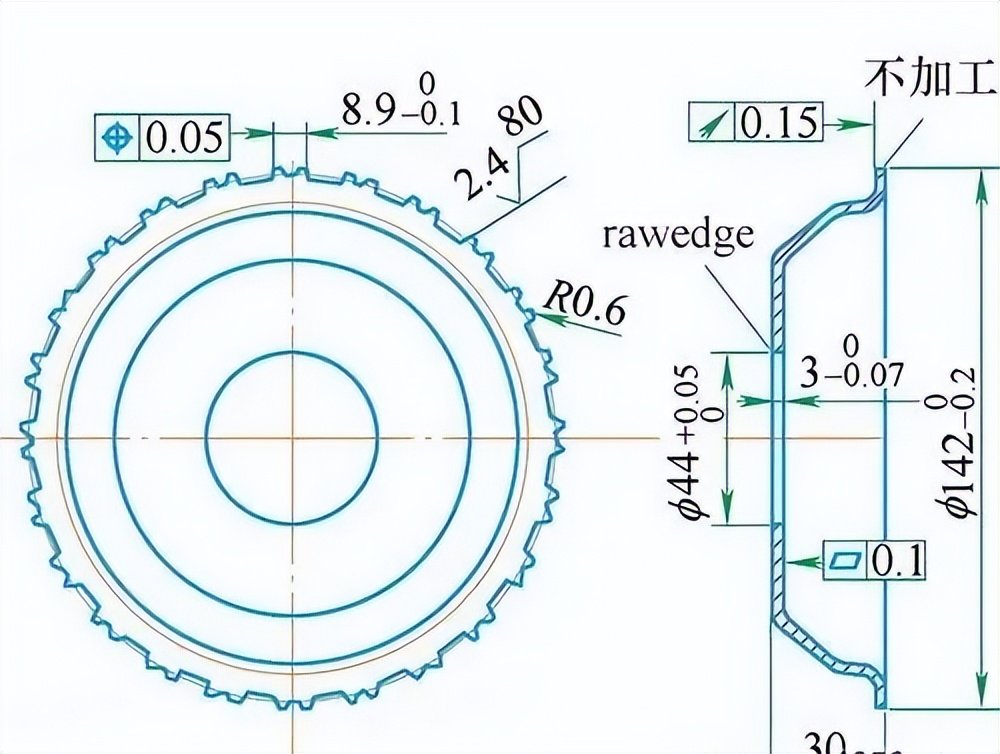
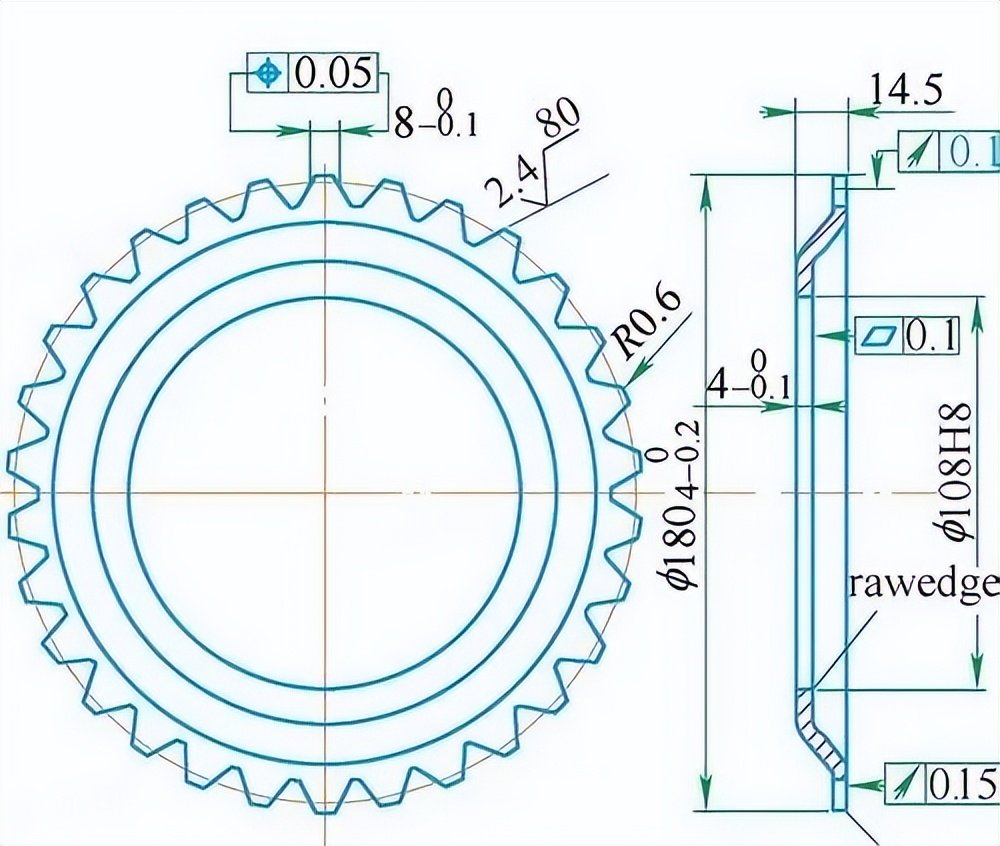
    Traditional fine blanking, which is mainly used to produce flat plate parts of equal thickness, belongs to the category of two-dimensional processing. However, composite forming technology breaks this limitation and allows products to be expanded to highly variable three-dimensional parts, such as dish gears with bosses or counterbore holes in gearboxes, structural parts, etc., all of which rely on this technology to achieve three-dimensional forming.

    This leap has greatly broadened the boundaries of fine blanking technology. It makes fine blanking no longer limited to simple contour separation, but can be directly manufactured to produce three-dimensional functional parts with assembly or transmission functions, realizing the role change from “blanking” to “forming manufacturing”.

    Combination with volumetric forming process

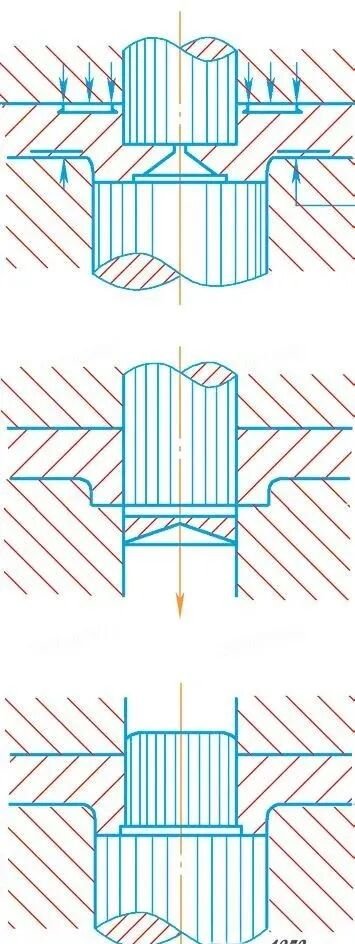
    When parts have higher requirements, fine blanking can be combined with volumetric forming processes. This situation is related to methods such as upsetting and extrusion that redistribute the material volume. These methods are used to manufacture parts with unequal thickness or partial protrusions. For example, a deep blind hole or boss is directly extruded on a thick steel plate. This is a typical fine blanking-extrusion composite forming method, right?

    This combination puts forward higher requirements for equipment and also puts forward higher requirements for molds. The extrusion process requires huge force to make the material plastically flow, so a fineblanking machine with sufficient tonnage must be used. At the same time, the mold structure is more complex, and the filling of materials needs to be accurately controlled, as well as the flow direction of the material to avoid defects.

    Multi-station automatic cold heading technology

    Multi-station automatic cold heading is another high-efficiency composite forming process for axially symmetrical parts such as bolts and nuts. It integrates many work stations such as shearing, upsetting, forming, and diameter reduction on one piece of equipment. The rods are continuously fed in and gradually deformed through each station before finally forming the product. Modern cold heading machines can have 5 or more work stations.

    With virtually no waste, this process offers extremely high material utilization and part strength is enhanced by work hardening. The output can reach hundreds of pieces per minute, and its production speed is extremely fast. The blank pretreatment and mold cooling and lubrication during production have strict specifications to ensure accuracy.

    Key conditions for process implementation

    To successfully implement composite forming processes, high-performance presses are indispensable. The equipment must provide a large and stable forming force, precise slide control and good rigidity. For example, when performing deep extrusion operations, fineblanking machines with a tonnage of 800 tons or more are often required.

    The core carrier of the process is the fine-blanking multi-station pier forming of three-dimensional complex parts of the mold. The design of the multi-station progressive die or composite die is very critical. It is necessary to reasonably arrange the station sequence and design an effective material guidance and positioning mechanism. At the same time, surface treatment such as phosphating and saponification of the blank to reduce friction and prevent mold sticking is an important link to ensure continuous and stable production.

    Application prospects and challenges

    This technology has broad prospects in the fields of automobiles, electrical appliances, and precision instruments. As part design becomes increasingly complex and lightweight, the need for one-time molding of complex three-dimensional parts will continue to rise. It can significantly reduce subsequent processing and reduce overall costs, which is in line with the development trend of high efficiency and precision in modern manufacturing.

    However, there are challenges in promoting technology. Mold design and manufacturing is very difficult, the cycle is very long, the cost is very high, and it is highly dependent on the experience of technical personnel. At the same time, process debugging is complex and requires a large number of tests on different materials and shapes to determine the best parameters, which places high demands on the company’s R&D capabilities.

    What is the general method of riveting and welding for companies that want to improve their integrated parts manufacturing capabilities? Do you think the biggest bottleneck when introducing composite forming technology is the high investment in equipment, or the lack of professionals who are proficient in process and mold design? Welcome to share your views.