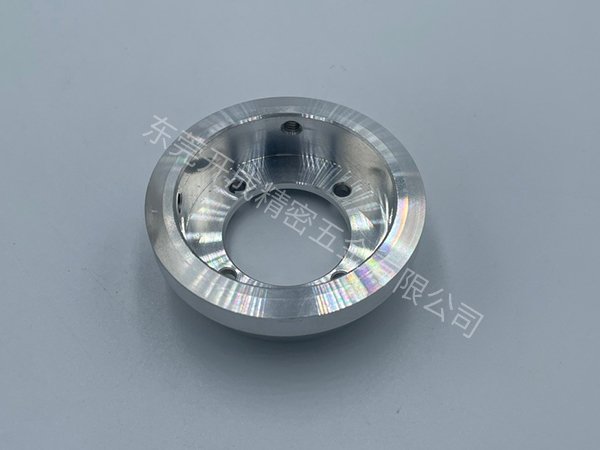


Analyze what are the main components of the cost of stainless steel parts processing?
What is the high cost of processing stainless steel parts? Many purchases only focus on the unit price of materials, but ignore the hidden expenses in the processing process. Today, we will break down the true cost structure from six different aspects to help you see clearly where the money is spent.
![图片[1]-Analyze What Are The Main Components Of The Cost Of Stainless Steel Parts Processing?-Dalian Fuhong Machinery Co., Ltd](/wp-content/uploads/2026/04/1776017223406_0.jpg)
The cost of raw materials does not just depend on the steel grade
In April 2026, the market quoted a price of about 18,000 yuan per ton for 304 stainless steel, and 26,000 yuan per ton for 316 stainless steel due to the addition of molybdenum. For plates with the same specifications, 316 is nearly 45% more expensive than 304. Compared with 2 mm thick steel plates, steel plates with a thickness of 10 mm are about 800 yuan cheaper per ton because thick plates are less difficult to process. Stainless steel imported from Germany or Japan has stricter impurity control, so the price is 20% to 30% higher than that of domestically produced stainless steel. Material utilization also needs to be considered when purchasing. Laser cutting will leave scraps, and the scrap rate of round parts is 15% higher than that of square parts. If the order quantity is only a few dozen pieces, the supplier will generally calculate the price based on the retail price and charge an additional three to five yuan per kilogram. However, for large quantities of purchases, the cost difference between precision machining of coils and ordinary processing can be directly used, and the cost will be reduced by 12%.
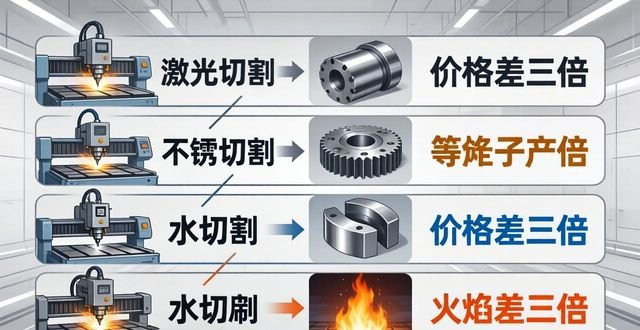
Prices vary three times depending on the cutting method
In 2025, a quotation from a processing plant in East China showed that laser cutting 2 mm thick 304 steel plate would charge 180 yuan per hour, and the cutting speed would be 4 meters per minute. Plasma cutting of the same thickness only charges 90 yuan per hour, but the speed reaches 8 meters per minute. However, the plasma cutting heat-affected zone is large and the edges are black, requiring secondary polishing. For stainless steel plates with a thickness of more than 20 mm, the laser cutting machine lacks power and can only use water jet or plasma. Waterjet cutting will not change the properties of the material, but the hourly charge is extremely high at 300 yuan because of the huge consumption of sand. There is a machinery factory located in Suzhou. Near the end of 2025, it undertook a batch of orders related to valve parts, and the order required that the cut surfaces of the parts should be smooth and free of burrs. This machinery factory chose laser cutting. The cutting cost of a single piece is 12 yuan, which is 7 yuan more expensive than plasma cutting. However, it eliminates the subsequent polishing process, and in the end the total cost becomes lower.
The cost doubles for each level of improvement in machining accuracy
The tolerance for ordinary turning processing is limited to plus or minus 0.01 mm, and the processing fee charged per hour is 80 yuan. If you want to achieve a precision level of plus or minus 0.001 mm, you must use a CNC machine tool, which charges 250 yuan per hour. The cost involved in multi-axis linkage milling is even higher, and the price quoted per hour for a five-axis machining center ranges from 500 yuan to 800 yuan. According to the situation of processing a 304 stainless steel flange with a diameter of 50 mm, the general process of rough turning and fine turning takes a total of 20 minutes, and the total labor cost is 27 yuan. If there is a requirement for an inner hole tolerance of plus or minus 0.005 millimeters, a grinder will be needed for finishing, which will add an additional fifteen minutes to the working time and cause the total cost to rise to sixty-five yuan. There is a precision machining factory located in Shenzhen. In January 2026, it received a batch of orders for medical device parts. The order required that the tolerances of all dimensions should be controlled within plus or minus 0.002 mm. Therefore, they had to use a coordinate grinder imported from Switzerland for processing. In this case, the processing cost of a single piece reached 180 yuan, but the processing cost of the ordinary precision version was only 45 yuan.
The price difference from matte to mirror in surface treatment is five times
For ordinary matte polishing, if you use a louver wheel for one pass, you will be charged 2 yuan per square decimeter. If you want to achieve a mirror effect of Ra0.4 micron, you need to go through three processes of rough polishing, medium polishing and fine polishing, and you have to use polishing pastes of different particle sizes. In this case, you will be charged 12 yuan per square decimeter. The cost of electroplating is higher. Chromium plating costs 18 yuan per square decimeter, and nickel plating costs 25 yuan. Stainless steel parts must be completely degreased before electroplating, otherwise the coating will peel. Passivation treatment is relatively cheaper. It is soaked in the entire tank and charged according to the weight of the parts. The charge is between 5 and 8 yuan per kilogram. In October 2025, a food machinery factory in Zhejiang produced a batch of mixing tank parts. The customer requested that the inner surface be mirror polished to prevent bacterial adhesion. The total polishing area of this batch of parts was 8 square decimeters, and the polishing area of a single piece The cost is 96 yuan, the difference between the cost of precision machining and ordinary processing . However, ordinary matte treatment only costs 16 yuan. However, the corrosion resistance of parts after mirror treatment is significantly improved. For example, in the salt spray test, the time was extended from 48 hours to 200 hours.
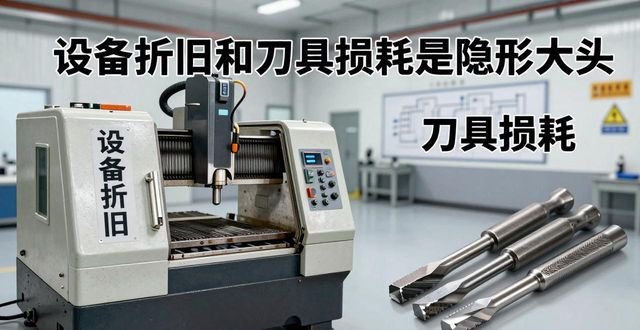
Equipment depreciation and tool wear are hidden big problems
The selling price of a five-axis machining center imported from abroad is 1.2 million yuan. It is depreciated over five years, and the monthly amortization amount is 20,000 yuan. If 1,000 parts are processed per month, each part will bear an equipment depreciation fee of 20 yuan, and the cost of tooling is also very staggering. For processing stainless steel, carbide or ceramic tools need to be used. The price of a milling blade is 35 yuan, which can only cut continuously for 40 minutes. When processing 316 stainless steel, tool wear is 30% faster than that of 304, because the work hardening phenomenon of 316 is more serious. A precision machining factory in Dongguan conducted a statistical analysis in February 2026. What are the main components of the cost of stainless steel parts processing? The statistics are: when processing a batch of 316 stainless steel parts, the tool cost accounts for 18% of the total cost. However, when processing ordinary carbon steel parts, the tool cost only accounts for 5%. They also found that using imported coated tools with a price of 80 yuan per piece, even if the unit price is higher, the service life is extended to 90 minutes. After comprehensive calculation, the cost of each tool is reduced by 2 yuan.
Labor and management costs rise with accuracy requirements
In the Yangtze River Delta region, the actual expenses of a skilled CNC operator with a monthly salary between 12,000 and 15,000 yuan, including five insurances and one fund, are about 20,000 yuan. Moreover, such operators often operate two machine tools at the same time, and the hourly labor cost is about 55 yuan. The monthly salary of ordinary lathes is only 7,000 yuan. However, the processing accuracy is low and the efficiency is low. The cost difference between precision machining and ordinary processing cannot be ignored. The cost of quality management cannot be ignored. The hourly inspection cost of a coordinate measuring machine can be 100 yuan. If you encounter complex parts that need to be inspected for 20 minutes, the cost will increase by an additional 33 yuan. It is obviously different from factories that only do rough machining. The full-year data for 2025 clearly shows that the management of precision machinery processing plants involves many aspects of expenditure and control such as workshop water and electricity, site rent, quality control, and scheduling. As it happens, the annual management costs account for about 15% of the production turnover; for factories that only do rough machining as a business scope, the annual management costs in 2025 account for less than 8% of the turnover.
After you read the dismantling of these six costs, you may be able to understand where the cost difference in processing stainless steel parts comes from. It mainly stems from accuracy requirements and surface quality. As a result, questions immediately arise: Do your products really need such extremely high precision? Moreover, how can it be achieved by optimizing the design, improving the accuracy of key dimensions, and appropriately relaxing other parts, thereby greatly reducing the cost? You are sincerely welcome to share your relevant experiences in the comment area and like it so that more procurement colleagues can see this cost list.




暂无评论内容