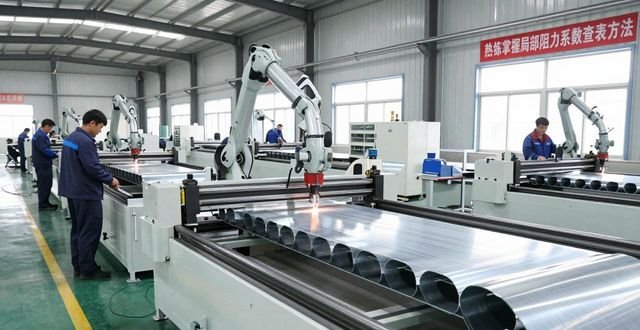


Central air conditioning duct equipment-Fengzhifan-galvanized sheet duct production
For central air conditioning and ventilation projects, the core component is the spiral air duct. Many people don't know that if the air duct design is not done well, there will be loud noise, low air volume, and even equipment damage. As long as you master the following six key technologies, you can make your ventilation system more efficient and save money.
You must understand the calculation of air duct resistance before designing
Air duct resistance covers two categories: friction resistance and local resistance. Friction resistance is generated by the mutual friction between the air and the pipe wall. It is related to the length of the air duct and the roughness of the inner wall. However, local resistance comes from components such as elbows, tees, and reducers. The "Construction Quality Acceptance Code for Ventilation and Air Conditioning Projects" to be implemented in 2025 clearly requires that the total resistance must be calculated during the design period, and the error cannot exceed 10%. Otherwise, the selected fan will either have insufficient air volume or be too powerful, causing a waste of electricity.
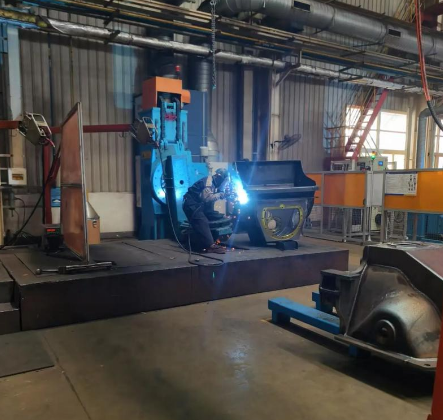
During the actual project , the central air-conditioning ventilation ducts (white iron/galvanized sheet) were riveted and welded . Many construction teams relied on experience to estimate. As a result, there was no wind at the air outlet when the system was running. The correct approach is to use formulas to calculate the resistance along the length of each section of air duct, and then add up the local resistance of all pipe fittings. Since the inner wall of galvanized spiral duct is so smooth, the friction resistance is 15% to 20% lower than that of angle iron flange duct. In this way, a lot of electricity bills can be saved every year, and the difference in material price can be recovered in about three years.

Proficient in table look-up methods for local resistance coefficients
The local resistance coefficients of elbows, tees, and reducer pipes are riveted and welded for central air conditioning ventilation ducts (white iron/galvanized sheets) . Standard values can be seen from the design manual. For example, for a 90-degree elbow, when the radius of curvature is 1.5 times the diameter of the duct, the resistance coefficient is about 0.2. However, if the radius is only 1 times, the coefficient will rise to more than 0.5. In 2024, when a shopping mall implemented a ventilation renovation project, too many small-radius elbows were used, resulting in insufficient air volume at the end, and everything was eventually reworked.
Skilled designers will optimize the pipeline direction and reduce the number of elbows as much as possible. If elbows must be used, central air conditioning duct equipment with a large curvature radius should be selected – Fengzhifan – galvanized sheet air duct production. In addition, the coefficients of pipe fittings of different materials It is also different. The surface of stainless steel spiral air duct is smoother and is about 5% lower than that of galvanized sheet under the same conditions. However, its price is two-thirds more expensive. Unless it is a kitchen exhaust fume or a medical clean workshop, galvanized is sufficient for general projects.
Design calculation principles for uniform air supply ducts
There are many factories and garages that require uniform air supply. There cannot be a situation where the wind is strong near the air outlet and there is no wind far away from the air outlet. This requires the use of a uniform air supply design method. The core point is to gradually taper the main duct from the starting point to the end, or to open air outlets of different sizes in different locations. For example, for a workshop with a length of 50 meters, the diameter of the main duct can be gradually reduced from 800 mm to 400 mm, and the opening area of each air outlet can be gradually increased.
When starting the calculation, make sure that the difference in air volume between the farthest air outlet and the nearest air outlet does not exceed 15%. For the purification workshop project of an electronics factory in Shenzhen in 2023, a tapered spiral air duct and a variable cross-section design method were used. Compared with the wind speed at the end, the difference was only 0.3 meters per second. By doing this, although the processing will be slightly more difficult, the temperature and cleanliness inside the workshop will be uniform, and the product quality pass rate will increase by 8%. If there is no uniform design, there may be no wind at the far end of the workstation. In summer, the workers cannot bear it.
Duct layout and branch duct selection should take both cost and effect into consideration
Please follow the shortest path principle for air duct layout. The main duct should be extended into a straight line as much as possible to reduce turns. When branch pipes are connected from the main pipe, the best way is to use a 45-degree miter instead of a 90-degree right angle. The local resistance produced by a miter joint is only one-third that of a right angle. Moreover, the diameter of the branch pipe must be determined based on the air volume of the service area and cannot be reduced at will. In an office building project in Beijing in 2025, the designer placed the main air duct in the corridor ceiling and distributed the branch ducts to each room, which not only improves the appearance but also saves materials.
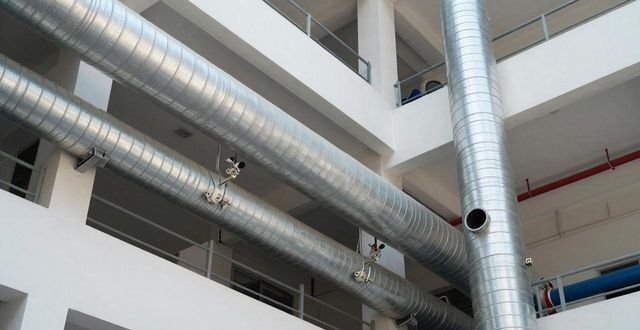
A regulating valve still needs to be installed on the branch pipe to facilitate later debugging of the air volume. For multi-story buildings, maintenance openings must be reserved for the main air ducts in the shaft. Due to the spiral shape of the bite, spiral air duct is 30% stronger than ordinary welded air duct and can withstand higher pressure. Therefore, spiral air ducts are increasingly used in air supply systems of high-rise buildings to reduce pipe wall vibration and noise. During the layout, it is also necessary to avoid fire water pipes and electric wire bridges, otherwise the subsequent construction will not be possible.
Two-phase flow resistance characteristics of pneumatic conveying system
Some factories that need to transport bulk materials such as foam pellets, wood chips, and plastic pellets will use pneumatic conveying systems. The mixed flow of air and solid particles is called two-phase flow. Drag calculations are much more complicated than just air. The larger the particles and the smaller their specific gravity, the easier they are to suspend. For example, when conveying foam particles with a density of 20 kilograms per cubic meter, the wind speed should be maintained at 18 to 22 meters per second. If it is too low, it will cause blockage, and if it is too high, it will wear the pipe wall.
In pneumatic conveying, spiral air ducts have significant advantages. The spiral seams used for gas transportation strengthen the rigidity of the pipe body and are less likely to be deformed due to the impact of materials. There are no transverse welds on the inner wall, so the possibility of material sticking is low. In 2024, after a plastic products factory in Dongguan replaced the original welded air ducts with galvanized spiral air ducts, the original jamming situation that occurred five times a month was reduced to zero. However, it should be noted that when transporting hard particles, a wear-resistant lining must be added to the elbow, otherwise it will be worn out in just 3 months.
Determine the working matching point between the fan and the duct system
Fan selection is not based on power, but depends on the status of the working point. Each fan has a performance curve, and the duct system also has a resistance curve. The intersection point of these two curves is the actual working point. If the wind pressure of the selected fan is too high, the air volume will exceed the design value, resulting in increased noise and overloading of the motor. If the wind pressure is too low, the air volume will be insufficient, resulting in no wind in the terminal area. The new national standard in 2025 has relevant requirements. The working point must be within the high-efficiency area of the fan, and the efficiency must not be less than 75%.
When calculating, the system resistance curve needs to be drawn first, and then the fan performance curve is superimposed. If the intersection point is not in the high-efficiency zone, the air duct size must be adjusted or the fan must be replaced. In a restaurant smoke exhaust system renovation case , the central air-conditioning ventilation duct (white iron/galvanized sheet) was riveted and welded. Originally, a 7.5-kilowatt fan was used but the smoke still could not be discharged. Then the air duct was redesigned and the elbow with high local resistance was replaced with a guide plate. Only a 5.5-kilowatt fan was used to achieve the effect, saving more than 4,000 kilowatt hours of electricity every year. After actual measurement, the working point is exactly at the highest efficiency point of the fan, and the noise is also reduced from 85 decibels to 72 decibels.
In the ventilation projects you have carried out, have you encountered situations where the air volume is not sufficient or the noise is too loud? Share your relevant experiences in the comment area. You are warmly welcome. If the number of likes exceeds 500, I will write a special article on practical tips for reducing noise in air ducts.





暂无评论内容