

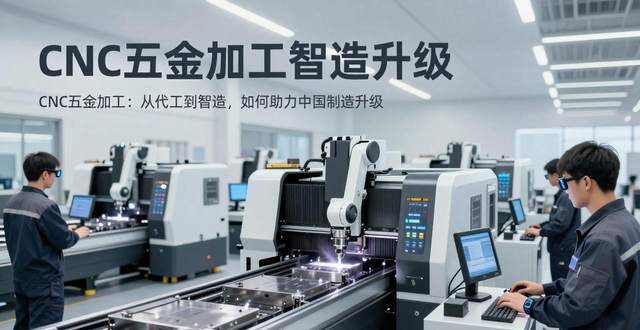
CNC hardware processing: from OEM to smart manufacturing, how to help China’s manufacturing upgrade
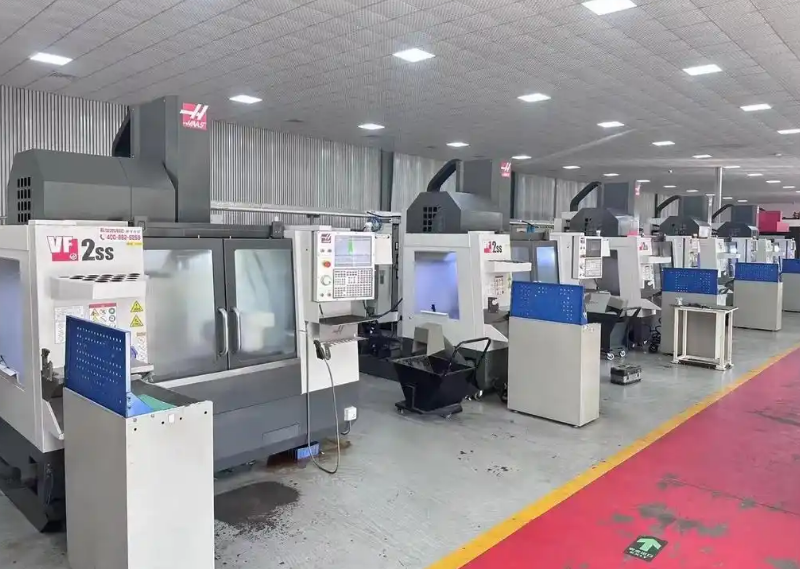
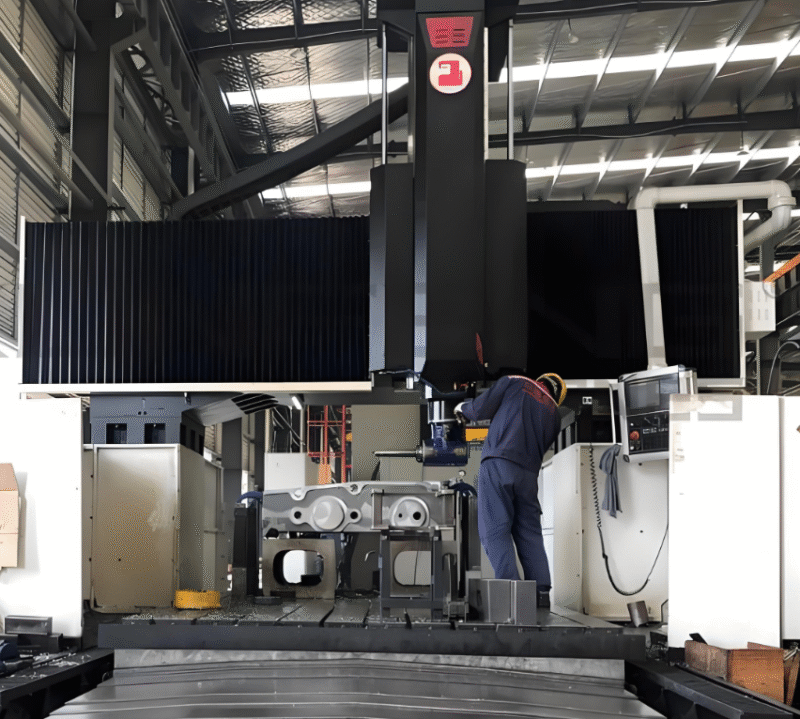
The bosses of precision machining factories in the Pearl River Delta region have recently been discussing one thing: how to transform the CNC machine tools placed in the workshop from simple cutting machines that look "silly, big, black, and thick" into equipment with intelligent features that can rely on themselves to determine the quality of processing. The answer lies precisely in CNC milling automatic measurement technology . This technology is currently changing the survival rules of thousands of factories engaged in hardware product processing in Shenzhen and Dongguan.
Smart upgrade of CNC machine tools
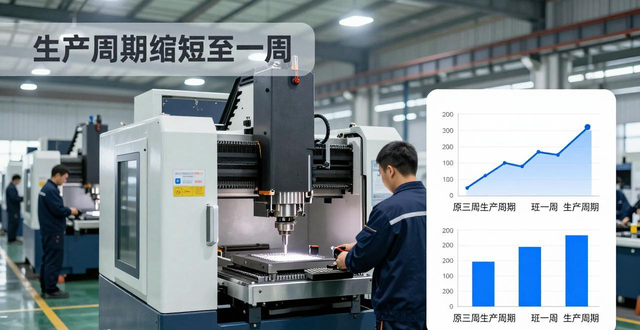
A technology called CNC milling automatic measurement, in short, equips machine tools with devices like "eyes" and "brain". During the machining process, the probe attached to the machine tool itself will be in real-time contact with the workpiece surface like a probe, and then feed back dimensional data to the control system. Once a dimensional deviation is detected, the system will automatically correct the subsequent processing path without the need for workers to stop frequently for measurements. There is a precision parts factory in Baoan, Shenzhen. After the introduction of this technology, the inspection time of a single product was reduced from 90 seconds to 15 seconds.
This technology is based on the deep integration of the machine tool body and the measurement system. Traditional CNC machining relies on manual sampling and CNC milling automatic measurement technology . One operator has to look after three machine tools and has to use calipers to measure parts every half hour. This results in a missed detection rate of more than 5%, the automatic measurement system uses wireless communication to transmit the data collected by the probe to the control cabinet in real time. The system makes its own judgment based on the preset tolerance range. Once an out-of-tolerance situation occurs, it will immediately alarm or automatically compensate, achieving a leap from "post-event detection" to "process control".
How to break through the 0.01 mm threshold in machining accuracy
In the hardware processing industry, there is often a saying that "a slight error can lead to a thousand miles of error." An error of just 0.01 millimeter is very likely to cause abnormal noise in the entire car gearbox, or cause the drone flight control to malfunction. Among the hardware processing clusters in Chang'an Town, Dongguan, those companies that can achieve a stable accuracy of 0.01 mm will have their order unit prices 30% higher than those of their peers. Automatic measurement technology is precisely the key to breaking through this accuracy threshold.

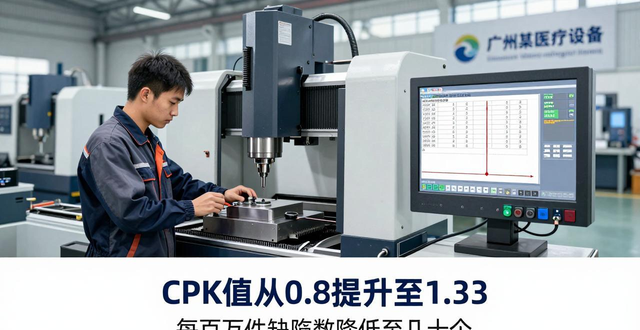
In practical applications, the probe is calibrated to the workpiece clamping position before processing to solve the positioning error caused by manual clamping. In the middle stage of processing, the system will automatically measure the key dimensions. When it is found that the dimensions are too small due to tool wear, it will immediately call the tool compensation function to adjust the cutting depth. Here, a company in Guangzhou that specializes in making parts for medical equipment revealed that after using this technology, the CPK value of their products increased from 0.8 to 1.33, which means that the number of defects per million products has been reduced from tens of thousands to dozens.
The qualitative change from manual sampling to full detection
When doing traditional hardware processing, the most feared situation is batch scrapping. At that time, hundreds of parts were produced, but in the final quality inspection process, it was found that the dimensions were out of tolerance. As a result, the entire batch of goods had to be reworked or scrapped. When such a situation occurs, the company in Longhua, Shenzhen It is not an uncommon phenomenon in the local mobile phone structural parts supply chain. A batch scrapping situation is likely to cause the factory to suffer losses of hundreds of thousands of yuan. Automatic measurement technology has achieved the task of 100% inspection of each product, reducing quality risks to a minimum.
This CNC machine tool system equipped with a probe can process and automatically detect each part 24 hours a day. The detected data will be automatically recorded and used to generate reports. CNC Hardware Processing: From OEM to Intelligent Manufacturing, how to help China's manufacturing upgrade, its value is reflected in its ability to run around the clock. The operator only needs to check the prompts given by the system when changing materials. If there are out-of-standard parts, the system will isolate the out-of-standard parts separately and issue an alarm in accordance with regulations. A factory in Huangjiang, Dongguan that produces automobile turbocharger parts has just introduced an automatic measurement system, and its defective product rate has dropped from 2.8% to 0.3%, reducing waste losses by more than 2 million yuan every year.
Digital upgrade of tool life management
In the CNC machining process, tool wear is the most important factor causing fluctuations in accuracy. There is a milling cutter. When it is first replaced, its cutting is very sharp. However, after processing hundreds of parts, the cutting edge slowly begins to become dull. At the same time, the size of the processed parts will also change accordingly. Automatic measurement technology can measure the size of the workpiece and in turn infer the status of the tool, thereby achieving precise management of tool life.
Another example is setting a benchmark for tool life, and the system will detect critical dimensions after each processing is completed. Once it is found that the size is deviating towards the lower limit of the tolerance, the system will automatically record the number of parts processed by the tool, and will also prompt the operator to replace the tool during the next material change process. There is a home appliance parts factory in Shunde, Foshan. After adopting this method, the average tool life jumped from 1,200 pieces to 1,800 pieces, and the frequency of tool changes was reduced by one-third. At the same time, it also avoided batch size deviations caused by excessively blunt tools.
Dual optimization of production line efficiency and personnel structure
Regarding CNC milling automatic measurement technology in the Precision Manufacturing Industrial Park in Jinwan, Zhuhai, a master who has been working for 20 years expressed emotion and said: "In the past, we relied on feel and experience, but now we rely on data and systems." Automatic measurement technology not only improves efficiency, but also changes the personnel composition of the workshop. Originally, a skilled technician could only undertake the quality inspection work of three or four machine tools, but now one person can dispatch more than ten automatic measuring machine tools.
This change is particularly important in the context of labor shortages in the Pearl River Delta. Young people are unwilling to enter the workshop to engage in repetitive measurement work. However, the automatic measurement system has liberated operators from tedious random inspection tasks, allowing them to focus on program optimization and exception handling. A hardware processing company in Zhongshan calculated an account. The investment in introducing an automatic measurement system is roughly equivalent to the salary of three quality inspectors for one year. However, the system can be used for five years or more, and will not affect detection accuracy based on fatigue or emotion.
The smart factory of the future comes standard
By 2026, CNC milling automatic measurement technology has changed from “optional” to “standard”. In smart manufacturing demonstration workshops in Shenzhen, Guangzhou, Dongguan and other places, CNC equipment with automatic measurement functions has been connected to the Internet, and all processing data is uploaded to the cloud in real time. Factory management can see the dimensional report of each part while in the office. Some companies go a step further and connect measurement data with upstream customer systems so that customers can remotely confirm product quality.
For those hardware processing companies that are considering equipment upgrades, it will be more cost-effective to purchase CNC equipment now and choose models with automatic measurement functions than to install them later. Domestic CNC systems such as Huazhong CNC and Guangzhou CNC have launched mature automatic measurement solutions, and the cost of the entire system has dropped by nearly 40% compared with three years ago. This technology is no longer unique to high-end factories, but a basic capability that every hardware processing factory that pursues quality and efficiency should master.
Does your current CNC production line still rely on manual hand-held calipers to conduct random inspections one by one? Once there is a technology that can reduce your defective rate by two-thirds, and allow customers to trust your process control capabilities at a glance when they conduct an audit , will you first put it into priority during the equipment procurement process in the next quarter? You are sincerely welcome to share your frustrations and accumulated experience in the field of machining accuracy management in the comment area.



暂无评论内容