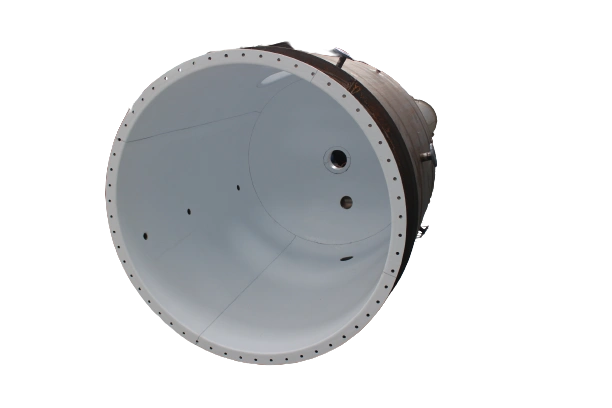


Specific instructions for internal and external anti-corrosion processes in storage tanks

In chemical plants and oil depots, the most common cause of equipment failure is storage tank corrosion. Once the anti-corrosion aspect is not accurate, in mild cases, frequent maintenance will be carried out, which will affect production, while in more serious cases, leaks will occur and cause safety accidents. As for how to choose the anti-corrosion process for inner and outer walls, and what key points exist in welds, linings and outer coatings, we will explain them clearly at once today.
The transparent coating at the weld is particular about
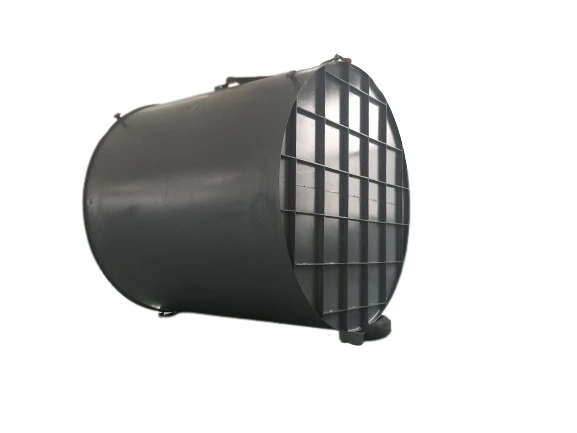
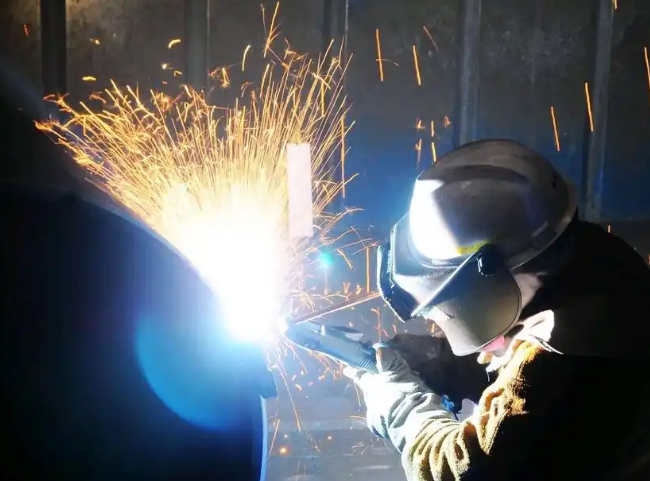
The weak link is the welded part in the inner wall of the storage tank. The uneven metal structure at the weld can easily cause electrochemical corrosion. In the industry, the weld is generally covered with a transparent coating or a colorless coating. The advantage is that it facilitates subsequent inspections to directly observe the coating status to determine whether repairs are needed. During actual operation, construction workers will first polish the weld to remove welding slag and spatter, and then carry out coating construction to ensure uniform coverage and no leaks.
One advantage of clear coating is that it facilitates non-destructive testing. After the tank has been in operation for a specific period of time, technicians can use visual inspection to detect blistering and cracking in the coating and evaluate the anti-corrosion effect without damaging the coating. For some key storage tanks, owners may even request that manholes be opened every six months to inspect the weld coating. Once problems are detected, they must be recoated in time to prevent small problems from turning into major hazards.
Composite coating adds double layer of protection to the inner wall
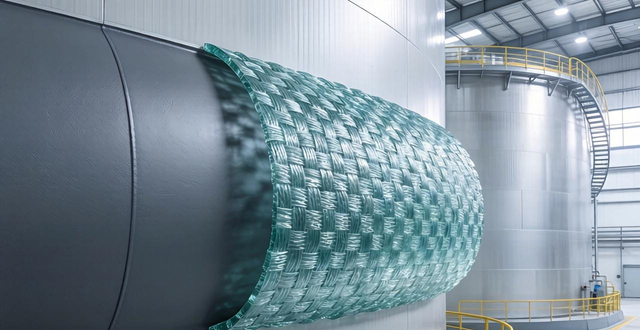
Sometimes, it is difficult to cope with the harsh corrosive environment by just relying on an anti-corrosion coating. In this case, a composite anti-corrosion coating comes in handy. The specific method is to first have a basic anti-corrosion coating, and then add a layer of fiberglass, polyimide or polyether material to form a physical isolation layer. Glass fiber has good corrosion resistance and its cost is relatively controllable. It is often used for the inner walls of storage tanks that store crude oil and refined oil products. Polyimide is suitable for high-temperature environments, such as hot oil storage tanks in refineries.
This kind of composite structure is like putting two layers of protective clothing on the inner wall of the storage tank. The first layer of coating is responsible for chemical anti-corrosion, and the second layer of reinforcement layer provides a physical barrier to prevent mechanical damage and medium penetration. From the perspective of practical applications, the overhaul cycle of storage tanks with composite coatings can be extended from the conventional five years to eight to ten years, and the whole life cycle cost is significantly reduced. During construction, attention should be paid to the compatibility between the two layers of materials to prevent delamination.
Cured resin lining is designed to treat highly corrosive media
For storage tanks that store concentrated sulfuric acid, ordinary anti-corrosion coatings cannot withstand the spraying of paint on the inner and outer walls of large tanks after riveting and welding to prevent corrosion. Cured resin linings must be used. This process is constructed by spraying. The inner wall of the tank must first be thoroughly cleaned and dried. To achieve the near-white standard, a special spray gun must be used to evenly spray the resin material on the wall surface. The material will undergo a cross-linking reaction at room temperature and solidify into a film. The same is true for storage tanks with highly corrosive media such as hydrochloric acid and sodium hydroxide.
The thickness of the cured resin lining is generally in the range of 1 to 3 mm, which is much thicker than ordinary coatings and can effectively block the penetration of acid-base media. Currently, there are two types of epoxy vinyl ester resin and phenolic resin that are widely used on the market. The former has outstanding acid resistance, while the latter has better solvent resistance. In 2023, when a chemical industry park in Zhejiang was renovating a batch of old storage tanks, they were all lined with epoxy vinyl ester resin. Until now, there have been no corrosion problems for more than two years.
Sand blasting and rust removal is the basis for external anti-corrosion
Before painting the outer wall of the storage tank that is exposed to wind, sun, and rain all year round, the rust layer and dirt on the surface must be completely removed. Otherwise, the coating adhesion will be insufficient, and the skin will peel off in a short time. Nowadays, sandblasting is recognized as the most effective method for rust removal. It uses high-pressure air to spray abrasives onto the surface of the tank wall at high speed, and uses the impact force to remove oxide scale and old coatings.
The quality of sandblasting and rust removal has a direct impact on the life of subsequent coatings. According to national standards, the rust removal level on the outer wall of the storage tank must reach Sa2.5 level, which means that the surface shows the true color of metal without visible oil stains, rust spots and oxide scale. In actual operations, it is necessary to control the sandblasting pressure, abrasive particle size and injection angle. During the construction of a large crude oil reserve in Shandong in 2024, some areas were reworked because the sandblasting operation was not standardized, and the construction period was delayed by nearly a month.
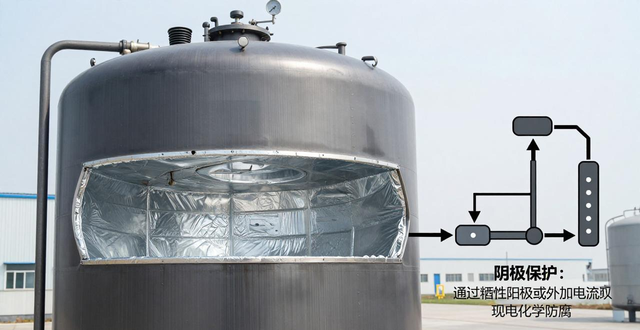
Galvanized coating relies on electrochemical principles to prevent corrosion
There is an anti-corrosion method called galvanizing coating, which is a sacrificial anode. A solution containing zinc ions is coated on the outer wall of the storage tank. The zinc will electrochemically react with the steel matrix to form a dense zincate layer on the surface. The standard electrode potential of zinc is more negative than iron. It will be consumed preferentially in the corrosive medium, thus protecting the steel matrix from being eroded. This process is especially suitable for the outer walls of storage tanks in humid environments.
In actual use, hot-dip galvanizing and cold-dip galvanizing co-exist. Hot-dip galvanizing puts the storage tank components into the molten zinc liquid. The coating thickness is large and the bonding force is strong. However, it is limited by the size of the plating tank. It is mostly used for small storage tanks or steel structural parts. Cold galvanizing is constructed by spraying and is not restricted by size. It can also be used on the outer walls of large storage tanks. In 2025, a seaside chemical plant in Jiangsu performed cold galvanizing treatment on open-air storage tanks. An inspection two years later found that the anti-corrosion effect was significantly better than ordinary paint coatings.
Inorganic silicate and epoxy coatings each have their own strengths
The inorganic silicate coating has strong adaptability to trace amounts of iron ions on the surface of the base material . The inner and outer walls of large tanks are spray-painted to prevent corrosion after riveting and welding. It is also highly adaptable to trace amounts of manganese ions on the surface of the base material. Even if there is a slight residue on the surface after rust removal, it can still achieve good adhesion. The outstanding feature of this coating is that it is After riveting and welding, the inner and outer walls of the tank are spray-painted to prevent corrosion. The film thickness is high and the density is high. The bonding force with the steel matrix is far better than that of organic coatings, and it can still remain stable under high temperature conditions. This type of coating is commonly used in flare towers in the petrochemical industry. This type of coating is also commonly used in high-temperature pipelines and other facilities in the petrochemical industry.
Epoxy coating is one of the most widely used varieties for external anti-corrosion of storage tanks. It has excellent corrosion resistance and chemical resistance, and is suitable for many scenarios such as mechanical equipment, pipelines, steel structures, aluminum materials, containers, underground storage tanks, etc. Epoxy coatings can achieve different functions by adjusting the formula. The internal anti-corrosion and external anti-corrosion process of the storage tank are detailed. For example, electrostatically conductive epoxy is used for the inner wall of the oil tank, wear-resistant epoxy is used for places that are often subject to mechanical damage, and heavy-duty anti-corrosion epoxy is used for buried storage tanks.
Tank anti-corrosion is not a simple painting-related work procedure, but a project with systematic characteristics. Starting from the treatment of the base material, to the coating selection step, and then to the control of construction quality, every link in it must not be careless in the slightest. In your opinion, in terms of actual work, which one of the two, inner wall anti-corrosion or outer wall anti-corrosion, is more likely to cause problems? What particularly difficult corrosion-related cases have you encountered during the operation? Feel free to share your experiences and corresponding opinions in the comment area.




暂无评论内容