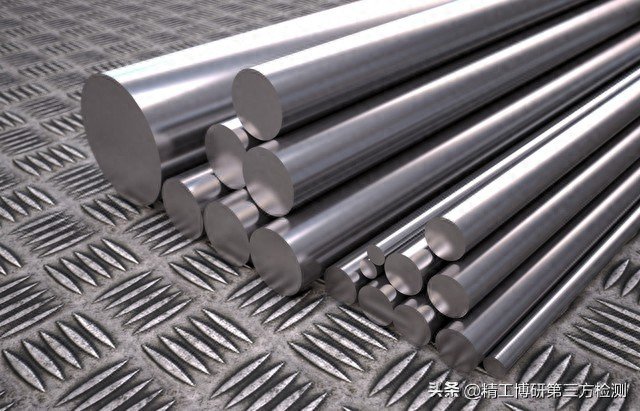


All the steel material testing methods you think about day and night are here
What are you most afraid of when buying steel? We are afraid that the goods are different from the required standards, and we are afraid that they may break, crack, or become deformed during use. In this entire article today, the six core testing methods that determine the quality of steel will be explained very thoroughly at once, allowing you to check the quality of materials from the source.
Tensile test measures the hardness of steel
The tensile test is carried out by processing the steel into a standard shape sample in accordance with national standards, placing it on a universal testing machine and slowly stretching it until it breaks. It is the basic method used to judge the mechanical properties of steel. During the test, the instrument records the relationship between force and deformation, and finally obtains the two core data of tensile strength and yield strength. Among them, yield strength represents the critical point at which the steel transitions from elastic deformation to plastic deformation, while tensile strength refers to the maximum tensile force that the steel can withstand.

The elongation and area shrinkage of steel can be measured in the tensile test in addition to the strength index. The elongation reflects the extent to which the steel can be stretched before breaking. The higher the value, the less likely the material will be brittle fracture. The area shrinkage is the shrinkage of the area at the fracture. From a small degree of observation, a large shrinkage means that the material has good plasticity. For example, the steel material testing methods you have been thinking about day and night for rebar used in construction are all here. It is necessary to ensure a high elongation to prevent the building from sudden fracture in the event of an earthquake.
Impact test tests the brittle fracture resistance of steel
The impact test is mainly used to evaluate the performance of steel under instantaneous impact, especially whether it will become brittle in low temperature environments. The common Charpy impact test is to place a sample with a V-shaped or U-shaped notch under a pendulum, and the pendulum falls from a fixed height to break the sample. The toughness of the material is judged by the absorbed energy. The higher the energy value, the stronger the impact resistance of the steel and the less likely it is to undergo brittle fracture.
This test is particularly important as construction begins in the northern winter. In December 2025, there was a wind power project in Inner Mongolia, and the tower installation work was in progress at that time. Because some of the steel materials used for flanges have low-temperature impact values that do not meet relevant standards. So after the welding was completed on site, cracks appeared. Later, after testing, it was found that the Charpy V-notch impact energy absorbed by this batch of steel was only 27 joules. This value is far lower than the 47 joules required by the design. In the end, these components worth 800,000 yuan were all judged to be scrapped and could only be repurchased.
Hardness test to quickly evaluate the wear resistance of steel
The ability of steel to resist local intrusion is called hardness, which has a certain conversion relationship with tensile strength. The commonly used Brinell hardness test uses cemented carbide balls to press into the surface of the material to measure the diameter of those indentations. This test is suitable for testing softer or unevenly structured steels such as castings and forgings. The Rockwell hardness test will directly display the reading. Its operation is fast and efficient, and it is suitable for batch inspection of workpieces after quenching.
In the mechanical processing industry , how to detect the quality of Q345 steel plate riveting welding , the hardness value plays a direct decisive role in tool selection and cutting parameters. In January 2026, a mold manufacturing factory in Dongguan purchased a batch of mold steel with Cr12MoV specifications. When the goods arrived, a Rockwell hardness tester was used for sampling inspection, and it was found that the hardness was only 52HRC. However, the hardness range agreed in the contract was 58 to 62HRC. The factory immediately contacted the supplier on how to test the quality of the Q345 steel plate riveting and welding , and asked for a return or exchange, thus avoiding the risk of early wear and shortened life of the mold after using this batch of materials for processing. This batch of steel is associated with 32 sets of molds, and its value exceeds 450,000 yuan.
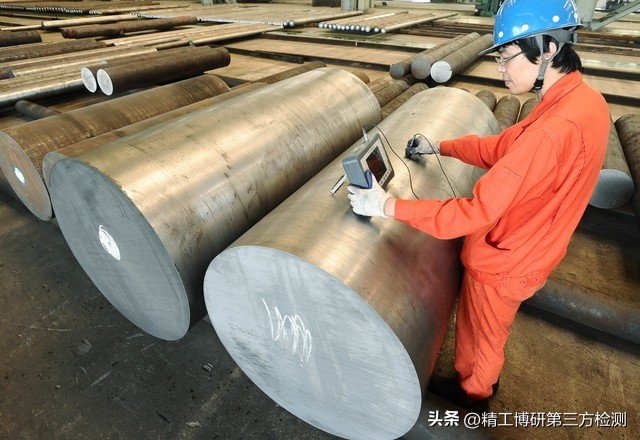
Fatigue test predicts service life of steel
Most steel materials do not fail due to a single overload, but fatigue fracture occurs under repeated alternating stress conditions. The fatigue testing machine simulates working conditions such as rotation, bending, tension and compression cycles, causing the sample to repeatedly bear the force under stress conditions below the yield strength, and then records the cycle frequency from initiation to fracture. This frequency is the fatigue life of the material, and different stress levels correspond to different life values.
Connecting rods and crankshafts are on the car, and axles and rails are on the railway. These must undergo rigorous fatigue tests. In 2025, when CRRC was developing a new generation of high-speed EMU bogies, it conducted more than 10 million fatigue tests on the steel plates used to ensure that it would not suffer from fatigue cracking during its 30-year design life. The data obtained from the test also helped engineers optimize the welding structure, reducing the stress concentration coefficient at the weld position from 2.8 to 1.9.
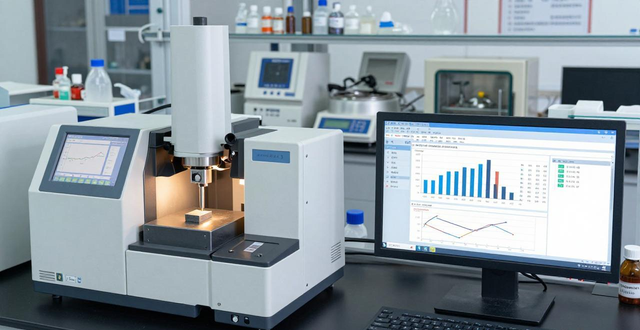
Chemical composition analysis controls materials from the source
The performance of metal material steel depends to a large extent on the content of its alloy elements and impurities. Spectral analysis is currently the most commonly used method. By exciting the surface of the sample with sparks and then analyzing the emitted characteristic spectral wavelength, the content of more than 20 elements such as carbon, silicon, manganese, phosphorus, and sulfur can be measured in tens of seconds. Portable spectrometers can also directly detect large components on site.
In August 2025, a bridge project supervisor in Zhejiang discovered that among the 300 tons of Q345qD bridge steel plates entering the factory, 16 of them had spectral analysis results showing that the sulfur content reached 0.025%, which exceeded the 0.01% limit stipulated in the national standard. If the sulfur content is too high, the toughness and fatigue resistance of the steel will be significantly reduced, especially under dynamic load conditions. This batch of steel plates was returned for processing on the spot, thus avoiding the potential safety hazard of early cracks in the bridge in the future.
Metallographic structure observation reveals the internal structure of steel
What determines the macroscopic properties of steel is its microstructure. Metallographic inspection requires cutting small samples from the components, grinding, polishing, and corroding them . How to detect the quality of Q345 steel plate riveting welding ? Under a microscope, the inspector can clearly see the size and shape of the grains and determine whether there are defects such as overheating, overburning, and decarburization. They can also identify different organizational forms such as martensite, bainite, and pearlite.
Whether the heat treatment process reaches the appropriate level can be directly known through the metallographic structure. Near the end of 2024, there was a factory in Shandong engaged in the production of fasteners. The 10.9-grade high-strength bolts it produced broke in batches after installation. Metallographic analysis shows that there is a large amount of undissolved ferrite in the core tissue of these broken bolts, which indicates that the quenching heating temperature did not meet the standard or the holding time was insufficient, resulting in the actual strength of the bolt being far lower than the nominal value. In the end, all 32,000 sets of bolts in this batch were recalled, causing direct economic losses of more than 600,000 yuan.
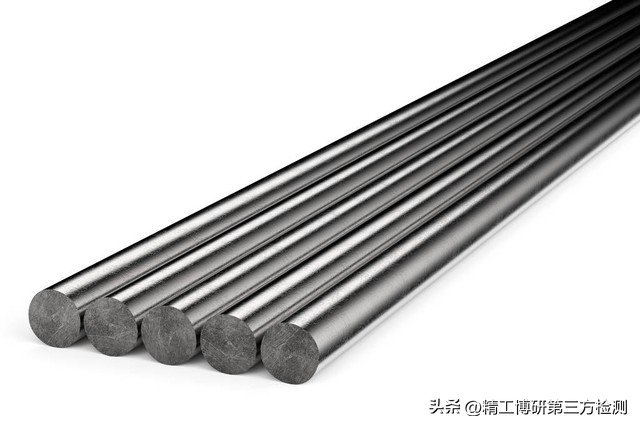
These six testing methods cover all-dimensional evaluations from macroscopic mechanics to microstructure. When purchasing or using steel, have you encountered any failures or losses caused by substandard testing? Welcome to leave a message in the comment area and share your experience so that more people can avoid errors in material selection.




暂无评论内容