

Alicona high-precision 3D surface measuring instrument measures tiny burrs around drilled holes-Malu Technology
Those tiny burrs hidden on the surface of the workpiece are very likely to be the culprit that causes your product to be scrapped. They not only affect the assembly accuracy, but are also a hidden killer that causes use failures. How to accurately measure these defects at the millimeter level or even the micron level has become a challenge that the manufacturing industry must face.
The hidden dangers of burrs
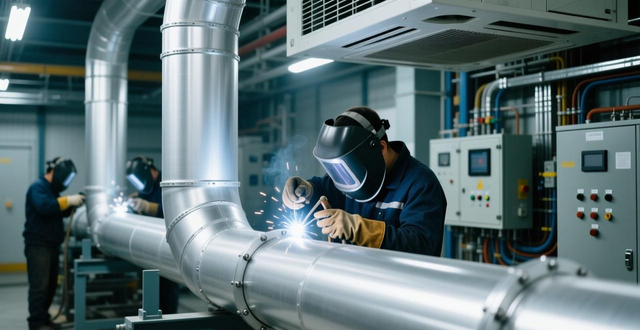
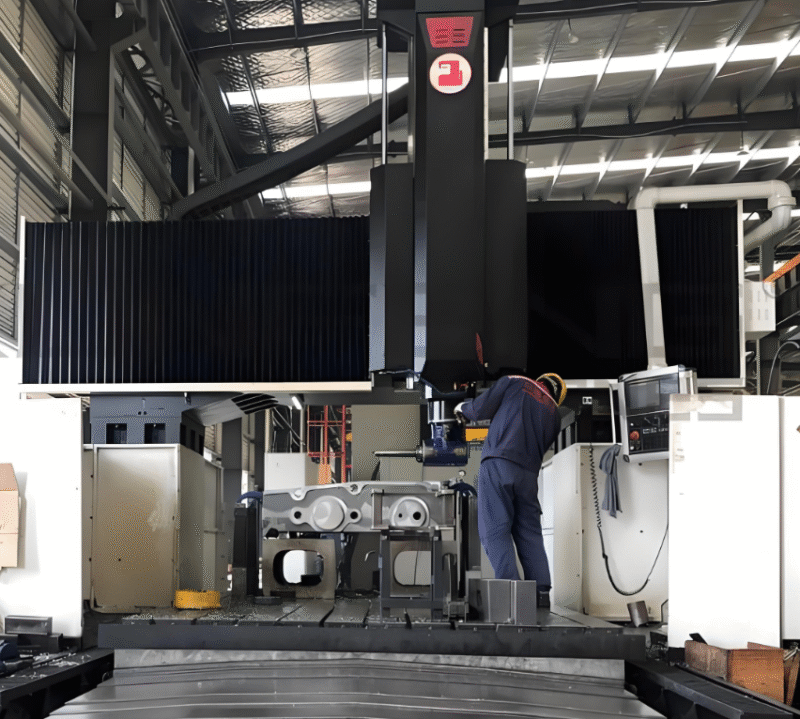
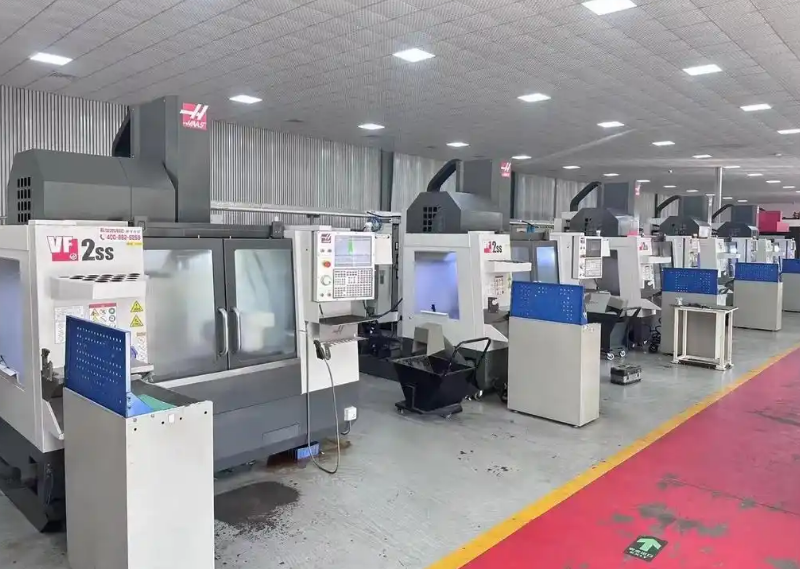
In the common processing technology of stamping, burrs are almost a by-product that cannot be completely avoided. In the common processing technology of drilling, burrs are almost a by-product that is difficult to completely avoid. In the common processing technology of turning, burrs are almost an unavoidable extra output. In common processing technologies such as milling, burrs cannot be completely eliminated. The secondary result is that these tiny metal protrusions may not seem inconspicuous, but they can prevent precision fitting parts from being assembled normally, or they may fall off during equipment operation, causing short circuits. In 2025, an auto parts manufacturer had leaks in its batch fuel injection system because of residual burrs when drilling, and a direct recall caused losses of more than 10 million.
Even if mechanical deburring is used, there may still be tiny burrs with a height of only 4 to 5 microns remaining around the hole. This kind of defect, which is almost invisible to the naked eye, can become a fatal hazard in medical devices or aerospace components. Tiny burrs on surgical instruments can scratch tissue, while burrs on aircraft hydraulic valve bodies may cause system failure.
Limitations of traditional measurements
The contact profilometer used to be the main tool for measuring burrs, but its stylus detection can cause damage to precision surfaces. Furthermore, the single-point scanning method has extremely low efficiency and cannot fully reflect the true distribution of burrs around the hole. Engineers often can only conduct sampling inspections, and it is not easy to obtain complete quality data.
The same kind of uncertainty comes from subjective judgments made by operators about operator skill in micro-part machining . For the same batch of parts, the Alicona high-precision 3D surface measuring instrument measures the tiny burrs around the drilled holes – Malu Technology. The test results obtained by different quality inspectors are very likely to have a gap of more than 20%. When the burr height is less than ten microns, the judgment made under the optical microscope has evolved into a gaming behavior that relies on experience, and there is still a lack of unified standards that can be quantified.
New solution for optical 3D metrology
![图片[1]-Alicona High-precision 3D Surface Measuring Instrument Measures Tiny Burrs Around Drilled Holes-Malu Technology-Dalian Fuhong Machinery Co., Ltd](/wp-content/uploads/2026/03/1772468268189_0.jpg)
![图片[2]-Alicona High-precision 3D Surface Measuring Instrument Measures Tiny Burrs Around Drilled Holes-Malu Technology-Dalian Fuhong Machinery Co., Ltd](/wp-content/uploads/2026/03/1772468268189_1.png)
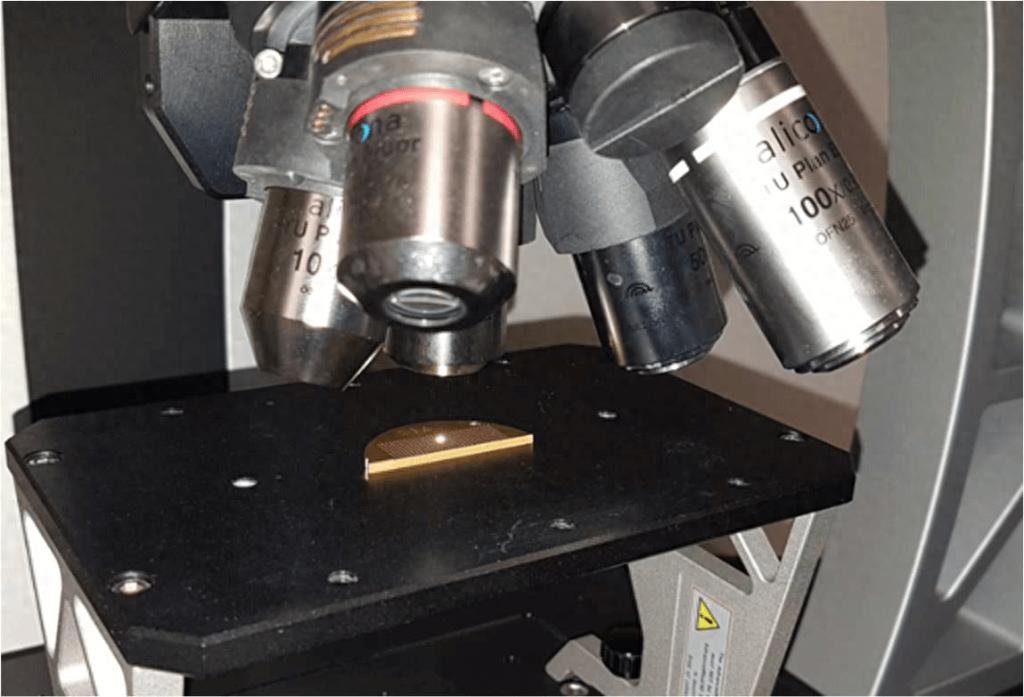
Providing a breakthrough solution to this problem is the G5 plus optical 3D metrology system developed by Mitis. This system can simultaneously measure 3D contours, as well as 2D dimensions and surface finish. During the copper alloy test plate drilling experiment, it successfully captured the complete morphological data of all burrs around the hole. Unlike stylus equipment, it uses non-contact optical measurement, completely eliminating the risk of surface damage.
![图片[3]-Alicona High-precision 3D Surface Measuring Instrument Measures Tiny Burrs Around Drilled Holes-Malu Technology-Dalian Fuhong Machinery Co., Ltd](/wp-content/uploads/2026/03/1772468268189_2.jpg)
During verification testing of aluminum alloy test plates, the research team used the system to quantify the performance differences of different cutting tools. Data shows that after a certain brand of drill bit processes 500 holes, the average height of the burrs increased from the initial 3.2 microns to 8.7 microns, which provides a hard indicator for tool life evaluation.
![图片[4]-Alicona High-precision 3D Surface Measuring Instrument Measures Tiny Burrs Around Drilled Holes-Malu Technology-Dalian Fuhong Machinery Co., Ltd](/wp-content/uploads/2026/03/1772468268189_3.jpg)
Intelligent defect detection module
The automatic defect detection module equipped with G5 Plus greatly improves detection efficiency. The sample is placed on the motorized XY platform, and the system automatically scans according to the preset parameters. The generated color data set can visually display the location of defects. In a certain test, the software accurately identified and numbered 7 burr defects, the smallest of which was only 4.1 microns in height.
With the pseudo-color processing function, the widest impact range of burrs can be clearly marked. The inspection work that originally took a senior quality inspector half an hour to complete can now be completed within 5 minutes, and the results can be fully quantified and traceable. The built-in analysis software can also automatically generate data tables to provide accurate basis for quality improvement.
The practical significance of micron-level detection
![图片[5]-Alicona High-precision 3D Surface Measuring Instrument Measures Tiny Burrs Around Drilled Holes-Malu Technology-Dalian Fuhong Machinery Co., Ltd](/wp-content/uploads/2026/03/1772468268189_4.jpg)
When manufacturing high-end watches, even a 4-micron burr is likely to cause the escapement to jam, causing the timepiece worth hundreds of thousands to lose accuracy. Similarly, if there are burrs in microelectronic equipment, it can cause short circuits. In addition, if surgical instruments have minor defects, they are closely related to patient safety. The quality inspection standards in the above-mentioned fields have been transformed from what can be seen with the naked eye at the beginning to quantification at the micron level.
![图片[6]-Alicona High-precision 3D Surface Measuring Instrument Measures Tiny Burrs Around Drilled Holes-Malu Technology-Dalian Fuhong Machinery Co., Ltd](/wp-content/uploads/2026/03/1772468268189_5.jpg)
![图片[7]-Alicona High-precision 3D Surface Measuring Instrument Measures Tiny Burrs Around Drilled Holes-Malu Technology-Dalian Fuhong Machinery Co., Ltd](/wp-content/uploads/2026/03/1772468268189_6.png)
The data collected from Mitis' experiments showed that the G5 plus system has the ability to stably detect burr-shaped defects as low as just 4 microns. During the inspection process specifically for luxury watch components, the system successfully identified burrs at the edges that were not easily detected using traditional methods, thereby helping the manufacturer reduce the probability of defective products by 37%. This kind of precision is of decisive significance for those industries that are dedicated to the pursuit of ultimate quality.
Cross-industry application prospects
Although that research focused on the skills of micro-parts processing operators on drilling burrs, this technology is also very suitable for quality control of other processes such as grinding and turning. Automobile transmission valve bodies, aerospace aluminum alloy structural components, precision injection molding molds, etc., can use this detection method to set and build more scientific and reasonable process standards.
![图片[8]-Alicona High-precision 3D Surface Measuring Instrument Measures Tiny Burrs Around Drilled Holes-Malu Technology-Dalian Fuhong Machinery Co., Ltd](/wp-content/uploads/2026/03/1772468268189_7.jpg)
In Greater China, Malu Technology, as a promoter of this technology, has established 8 service operation points to provide technical support to the automotive, aerospace and consumer goods industries. Its team of more than 200 experts is helping more companies transform microscopic defect detection from random inspection to full inspection, promoting the improvement of manufacturing quality and quality management into the micron era.
Wherever you are in the production process, have you ever been troubled by micron-level burrs? Welcome to share your burr removal experience and detection problems in the comment area. Like and forward so that more engineers can see this solution.
![图片[9]-Alicona High-precision 3D Surface Measuring Instrument Measures Tiny Burrs Around Drilled Holes-Malu Technology-Dalian Fuhong Machinery Co., Ltd](/wp-content/uploads/2026/03/1772468268189_8.jpg)
![图片[10]-Alicona High-precision 3D Surface Measuring Instrument Measures Tiny Burrs Around Drilled Holes-Malu Technology-Dalian Fuhong Machinery Co., Ltd](/wp-content/uploads/2026/03/1772468268189_9.jpg)







暂无评论内容