

An article analyzing several methods of painting LNG gas storage tanks
If the anti-corrosion work of the LNG gas storage tank is not done well, in a mild case, it will appear unsightly due to accumulation over time. In serious cases, the tank may be corroded, resulting in a thinning of the wall thickness, which may lead to safety accidents. Painting is regarded as the most direct and effective anti-corrosion method. Once the correct method is adopted, it can save a large amount of maintenance costs for the enterprise. At this time, we set out to analyze the actual operating points of these painting processes.
The brushing method is suitable for fine repairs
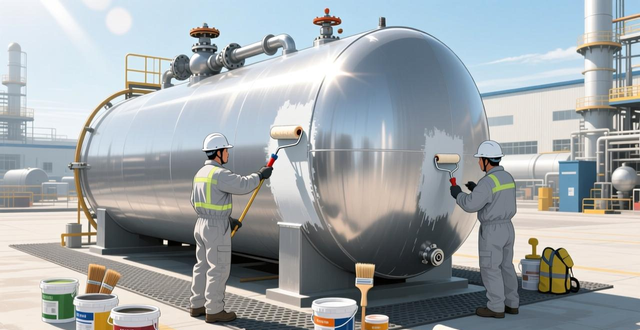
The most common paint brush is used for the brushing method. The advantages of this method are that the tool is simple and there is almost no threshold. For local touch-ups of small LNG storage tanks, as well as complex parts such as welds and flange connections, workers can easily handle them with a brush, and there is basically no waste of materials.
However, the brushing method has significant shortcomings. A skilled worker can paint up to dozens of square meters in one day, and its efficiency is extremely low. Moreover, the paint surface formed by manual brushing will inevitably leave brush lines. If the paint dries slowly, there will also be tear marks flowing downward. This requires workers to have rich experience and accurately control the amount of paint dipped in and the intensity of brushing.
Roller coating method improves flat surface efficiency
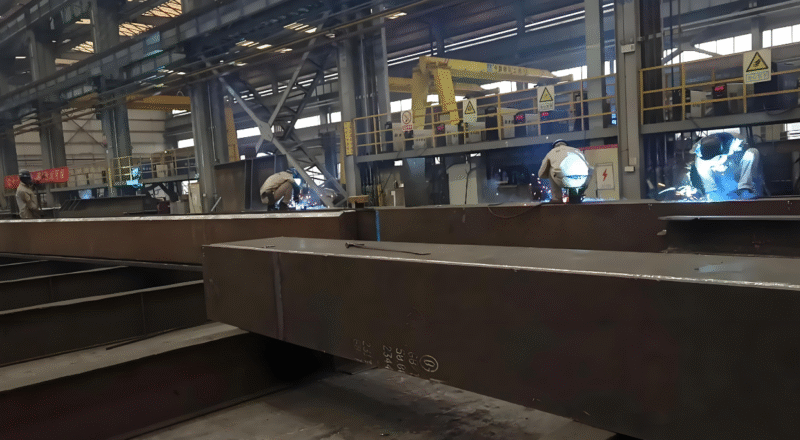
The roll coating method is performed using a roller with velvet. It is particularly suitable for treating large flat tank walls of gas storage tanks. The paint is rolled back and forth by the roller. The speed is several times faster than brushing, and the paint surface will leave uniform orange peel lines, which are more beautiful than brush marks. In the construction of a 100,000 cubic meter storage tank at a receiving station in Qingdao, workers used the roller coating method to complete the intermediate paint construction.
![图片[1]-An Article Analyzing Several Methods Of Painting LNG Gas Storage Tanks-Dalian Fuhong Machinery Co., Ltd](/wp-content/uploads/2026/02/1771589449578_1.png)
However, the roller cannot roll to the corners and the roots of the bolts, and a brush must be used to supplement these places. In addition, if the paint is too thin or rolled too fast, bubbles and pinholes can easily occur. In addition, the roller has requirements for the viscosity of the paint. If it is too thick, it cannot be pulled apart. If it is too thin, it will easily sag. This requires proper preparation on site.
Spraying method achieves efficient coverage
Nowadays, the most popular coating method for newly built large-scale LNG storage tanks is high-pressure airless spraying. With the help of a high-pressure pump, the paint pressure is increased and then sprayed out from the nozzle. In an instant, it is atomized into fine and tiny particles, which firmly adhere to the tank. In an LNG project in Dalian, the spray team was able to complete thousands of square meters of primer work in one day, and the efficiency was amazing.
The paint film formed by the spray has a uniform thickness, a smooth and dense surface, and has better anti-corrosion properties. However, it also has shortcomings. The utilization rate of paint during the operation is only around 60%, causing a large amount of paint to turn into paint mist and scattering everywhere. This not only causes a waste of resources, but also causes varying degrees of pollution to the surrounding environment. In addition, the spray equipment itself is relatively bulky and requires workers with specialized skills to operate it. Once the voltage or pressure is unstable, this article explains several methods of painting LNG gas storage tanks, the paint surface will easily appear defects similar to orange peel or granular.
Electrophoretic coating for special parts
Electrophoretic painting, which sounds quite advanced, is actually similar in principle to electroplating, except that the material being plated is paint. Immerse the metal parts of the gas tank into the paint tank and turn on the power supply. The paint particles will automatically adsorb to the surface to form a paint film. This method is frequently used on small accessory parts of storage tanks such as ladders, railings, bolts, etc.
It has the advantage that the paint film does not have any dead spots, any gaps can be covered perfectly, and the adhesion is extremely strong, and the corrosion resistance is quite long. However, it has shortcomings. The tank must be built, and it can only process the parts that can be put in. There is no way to carry out the overall construction of the already erected storage tank. In addition, the investment is huge, and usually only specialized processing plants have this capability.
Choose technology according to local conditions
![图片[2]-An Article Analyzing Several Methods Of Painting LNG Gas Storage Tanks-Dalian Fuhong Machinery Co., Ltd](/wp-content/uploads/2026/02/1771589449578_2.webp)
![图片[3]-An Article Analyzing Several Methods Of Painting LNG Gas Storage Tanks-Dalian Fuhong Machinery Co., Ltd](/wp-content/uploads/2026/02/1771589449578_3.png)
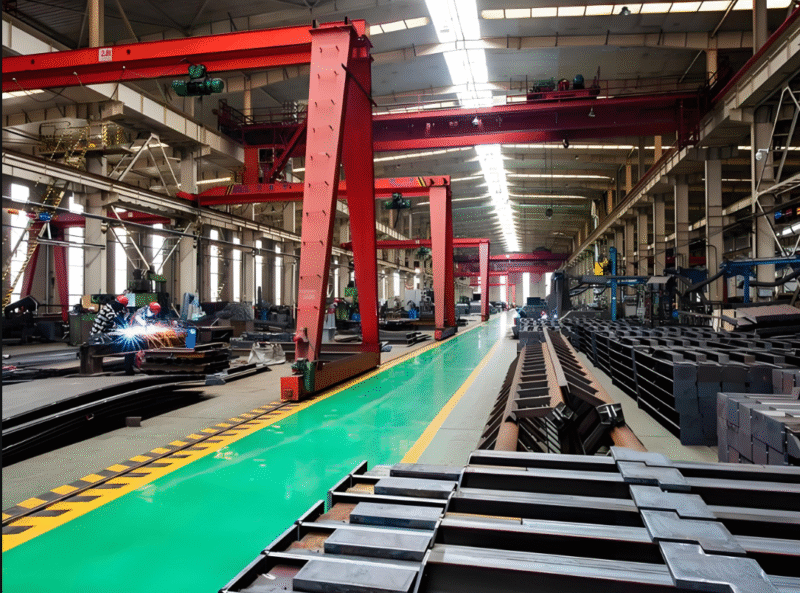
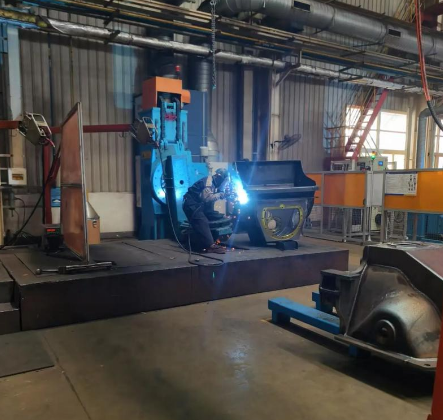
In an LNG peak-shaving station in Zhejiang, they used combination punches for different parts. The large surface of the tank was sprayed to ensure efficiency and quality. The manholes and instrument interfaces were refined with brushing. The prefabricated small steel structure directly purchased the finished electrophoretic paint. This method not only ensured the overall anti-corrosion life, but also controlled the cost.
During on-site construction, it is also necessary to check the weather conditions and spray paint on the inner and outer walls of large tanks to prevent corrosion after riveting and welding . If the humidity exceeds 85%, or the temperature on the surface of the steel plate is lower than the dew point, the paint film will easily rust or fall off. When construction is carried out in the northern winter, low-temperature curing coatings need to be used, while when construction is carried out in the southern summer, it is necessary to prevent blistering due to exposure to the sun. Therefore, a good plan is always determined based on the working conditions of the storage tank, the on-site environment and the economic budget.
Quality control throughout the entire process
Before the painting operation, sandblasting and rust removal must be carried out. After riveting and welding, the inner and outer walls of the large tank must be spray-painted for anti-corrosion to make it meet the Sa2.5 standard, which means that the metal surface must show a uniform gray-white metallic luster. In Jiangsu, a certain construction unit once had such a situation. Due to insufficient rust removal, large areas of rust began to appear half a year after painting. In the end, all the work was reworked, causing extremely heavy losses.
During the painting process, wet film cards need to be used from time to time to measure the thickness to ensure that each coat of paint is within the range specified by the design. After the painting is completed, the dry film thickness must be checked with the help of a thickness gauge, and pinhole detection must also be carried out. Only by strictly controlling every process can this layer of paint truly serve as a protective coat for the storage tank, allowing it to serve safely for decades.
Have you ever experienced any failure of storage tank anti-corrosion during actual work? How was it handled at that time? Welcome to share your experience in the comment area. If you think the article is valuable, please like it and forward it so that more people in the same industry can see it.




暂无评论内容