

Parameter control of titanium alloy cutting
When milling titanium alloys, blindly pursuing high cutting speeds will not only easily lead to tool damage, but may also cause combustion hazards, which is exactly the source of processing problems in many factories. However, by adjusting a specific combination of process parameters, it is absolutely possible to achieve efficient and high-precision processing goals while ensuring safety.
Cutting Challenges of Titanium Alloys
Because titanium alloy has the characteristics of high strength and high viscosity, significant frictional resistance will be generated during the cutting process. This resistance will directly cause the heat in the cutting area to be generated and accumulated rapidly. However, the thermal conductivity of titanium alloy material itself is not good, so the heat is difficult to Escape quickly. Once the cutting speed exceeds the safety threshold, the local high temperature can easily ignite the chips or even the workpiece, thus causing serious machining safety hazards. As a result, the traditional high-speed milling strategy for steel is completely ineffective when processing titanium alloys.
First of all, in addition to the risk of fire, high temperature will cause a series of chain problems. The accumulation of heat will cause local thermal expansion of the workpiece, which will affect the dimensional stability and ultimately lead to a reduction in processing accuracy. Secondly, high temperatures will accelerate the softening and wear of tool materials, greatly shortening tool life and thus increasing production costs. Therefore, understanding and controlling cutting heat is a key prerequisite for efficient processing of titanium alloy parts. Any process planning must focus on heat dissipation and temperature control.
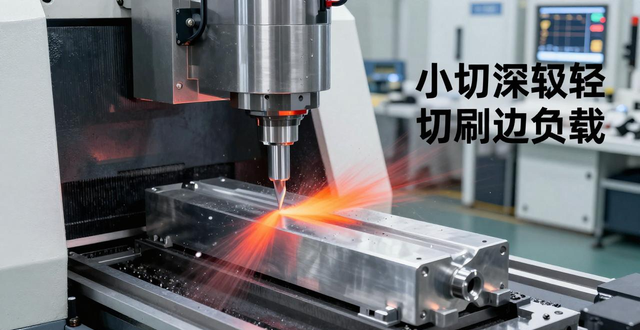
The principle of small radial cutting method
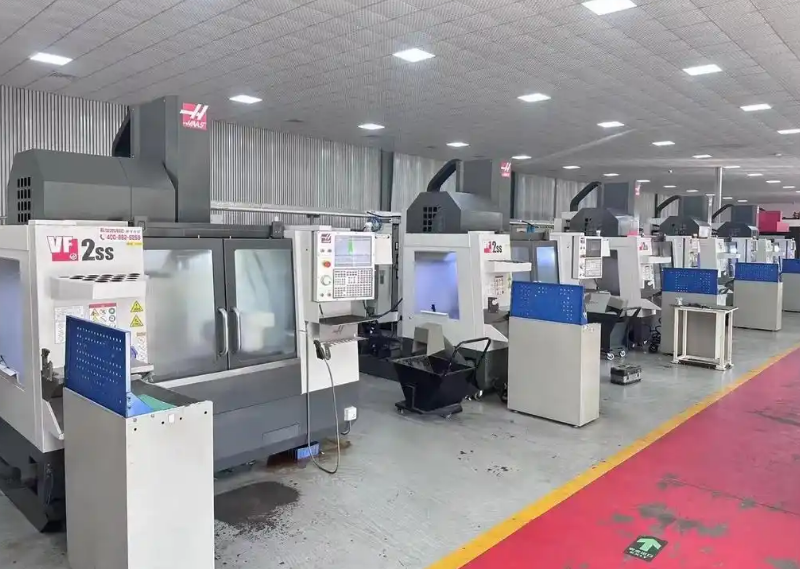
The key element of the small radial cutting method is to reduce the amount of heat generated by reducing the contact area between the tool and the material during a single cutting. This method requires that the cutting depth of the tool in the radial direction, that is, the width direction, is extremely small, but the normal cutting depth can be maintained in the axial direction. Since the volume of material removed in each cutting is not large, the cutting force and frictional heat generated are also significantly reduced.
![图片[1]-Parameter Control Of Titanium Alloy Cutting-Dalian Fuhong Machinery Co., Ltd](/wp-content/uploads/2026/02/1770676106245_0.png)
The advantage of this method is that it controls the source of heat generation. The small depth of cut reduces the load on the cutting edge and keeps the cutting force in a stable state, which helps maintain the rigidity of the process system and reduces vibration. At the same time, the smaller heat load allows time for heat to be transmitted to the chips and the tool, avoiding excessive concentration of heat on the workpiece surface, thereby creating conditions for subsequent increases in feed speed or spindle speed. This is the key to achieving "high-speed" machining without generating "high heat."
Specific settings of process parameters
Implementing the small radial cutting method requires a precise combination of parameters. The spindle speed should be selected within a relatively low range, for example, compared with the speed for processing steel of the same hardness, it should be reduced by 30 to 50 percent. The feed speed can be appropriately increased to allow the tool to quickly pass through the cutting area and reduce the heating time. The cutting depth must be strictly controlled in the radial direction to optimize the cutting parameters for titanium alloy processing . It is generally recommended to be between 5% and 10% of the tool diameter.
Taking processing of TC4 titanium alloy as an example, when using a carbide end mill with a diameter of 10 mm, the radial depth of cut can be set to 0.5 mm, and the axial depth of cut can be 2 mm. The spindle speed is set at 800 rpm and the feed per tooth is set at 0.08 mm. Such a combination of parameters can ensure the smooth discharge of chips and keep the cutting temperature within a safe range. Operators need to make fine adjustments based on machine tool rigidity, tool status and cooling conditions.
Improvement of processing accuracy
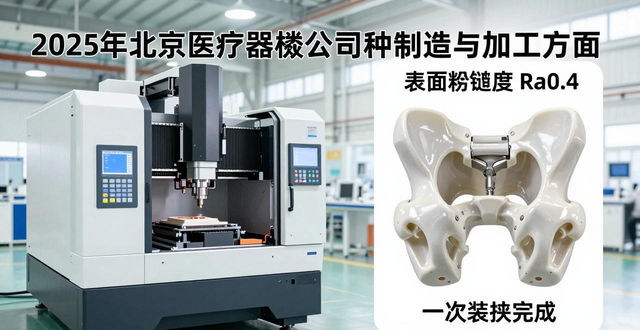
When this method is used in actual factory production, it can have a significant effect in improving the final accuracy of the parts to be processed. This is because the cutting temperature and cutting force are effectively controlled, thereby minimizing the dimensional deformation of the workpiece caused by thermal expansion. This situation is extremely critical for the processing of thin-walled titanium alloy components in the aerospace field, which has very strict requirements on technical standards for parts. This ensures that the tolerance requirements for key features such as hole positions and profiles are met.
Processing stresses are reduced, which directly improves the surface integrity of the part. The low stress state indicates that the residual distortion inside the workpiece is smaller, and the risk of deformation during subsequent use or assembly is also reduced. From a long-term perspective, this will improve the reliability and service life of the product, reduce the scrap rate caused by excessive accuracy, and ultimately bring tangible quality and economic benefits to the factory.
Effect on surface roughness
![图片[2]-Parameter Control Of Titanium Alloy Cutting-Dalian Fuhong Machinery Co., Ltd](/wp-content/uploads/2026/02/1770676106245_1.png)
The three parameters of cutting speed, feed speed and radial depth of cut that affect the surface roughness of titanium alloy workpieces are different from each other. Studies have shown that when using the small radial cutting method, as the cutting speed is moderately increased, the surface roughness value along the radial depth of cut direction of the tool will show a slight decrease. This is because higher speeds occasionally help to form thinner chips.
However, in the direction of feed, the changes in surface roughness will appear more complex. Due to the optimization of the cutting parameters for titanium alloy machining at the beginning of the feed, the speed that appears is a very low value. When the speed begins to increase in this state, the corresponding roughness will first go up. The reason for this is that the amount of feed per tooth increases at this time, which will inevitably lead to more obvious tool marks being left behind. However, when the feed speed continues to move in a higher direction until it reaches a certain range that is defined as reasonable, because the stability of the cutting is enhanced at this stage and the vibration is relatively reduced, the surface roughness will actually be improved. Therefore, in this case, it is necessary to find a balance point in the middle state.
Tool life and economic benefits
Benefiting from the dual control of cutting temperature and cutting force, the wear rate of the tool is significantly slowed down. The high temperature prevents serious crater wear or plastic deformation of the tool, and the cutting edge can remain sharp for a longer period of time. This not only reduces the downtime of frequent tool changes in the production line, but also directly reduces the consumption cost of high-value titanium alloy special tools.
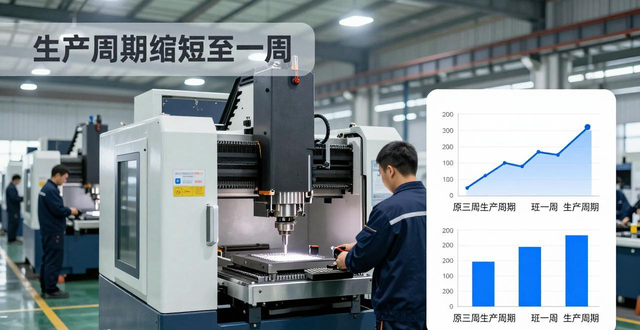
For factory operation managers, titanium alloy processing cutting parameters optimize the parameter control of titanium alloy cutting. This process change means an increase in overall production efficiency. The amount of material removed in a single cut becomes smaller, but after optimizing the path and parameters, the overall machining cycle may be shortened due to higher feed speeds and fewer tool change interruptions. Less scrap, longer tool life plus higher equipment utilization add up to significant long-term economic benefits.
When you process difficult-to-machine materials such as titanium alloys in actual work, what are the biggest bottlenecks you encounter? Is it tool cost, processing efficiency, or process stability? You are welcome to share your experience and insights in the comment area. If you find this article inspiring, please also like it to support it.





暂无评论内容