

Non-standard hardware processing
The installation quality of fans, which are key industrial equipment, is directly related to the operating efficiency and lifespan of the entire system. If there are omissions in the unpacking process, it will often lead to hidden dangers for subsequent failures, and this must be treated rigorously.
Unpacking inspection points
Unpacking work must be carried out in the presence of the equipment supplier, construction party and owner representatives. Pay special attention to checking the box number and quantity, and make sure that there are no signs of serious bumps or water immersion during transportation. After unpacking, the non-standard hardware should be processed immediately according to the contract drawings and packing list, and the fan model, factory serial number and transmission method should be compared one by one.
The inspection should focus on key data such as impeller diameter and casing size, and a steel tape measure should be used for field measurement verification. At the same time, it is necessary to confirm whether the impeller rotation direction mark and the position of the air inlet and outlet are completely consistent with the design drawings. Any dimensional errors or cosmetic defects will need to be photographed on site and documented in writing for future reference.
File and accessories management
Important and complete technical documents are often neglected. They need to be carried out systematically, including product certificates, instruction manuals, small batch orders for non-standard parts processing , general assembly drawings and consumable parts drawings. When it comes to imported equipment, the certificate of origin must be checked, and the customs declaration form must be checked. This is the case.
Random spare parts, such as special bolts and sealing gaskets, must be classified and stored according to the list and labeled. Special installation tools, such as hydraulic wrenches and alignment instruments, must be kept separately and carefully to prevent them from being mixed with other tools. Once these items are lost, it will directly cause the installation to be interrupted.
Lifting equipment selection
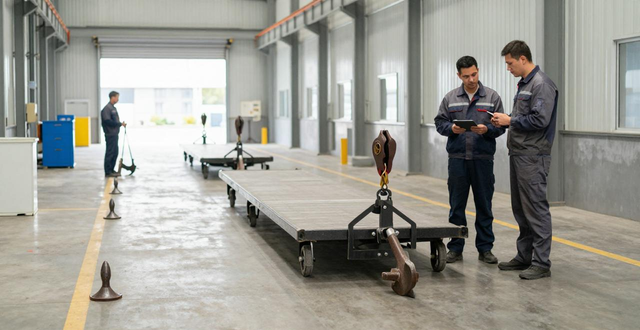
For the horizontal movement of large wind turbines, steel rows with sufficient load-bearing strength are selected, coupled with heavy-duty rollers and mechanical traction devices. The ground on site must be compacted and leveled, and the distance between sleepers should not exceed one meter to prevent the rows from deforming.
Priority is given to using a truck crane for vertical lifting, and a safety margin of more than 30% must be left for the crane's tonnage. If space is limited, a temporary lifting frame can be installed on the concrete beam and lifted with the help of an electric hoist set. All machines must be inspected by a safety officer before being used.
Hoisting operating specifications
The lifting points must be strictly set at the lifting lugs or reinforcing ribs specified by the equipment manufacturer, usually at the top of the casing. Never allow ropes to be wrapped around spindles, couplings or bearing housings. Semicircular protective tubes must be added where the wire rope contacts the equipment at an acute angle.
During the lifting operation, the fuselage should be kept in a stable state. After the height reaches 20 cm from the ground, it needs to be suspended for three minutes to check the balance state. During the entire process of installing the fan, a dedicated person must use a crowbar to perform auxiliary fine-tuning to ensure that the anchor bolt holes and foundation embedded parts can be aligned at one time.
Horizontal shipping details
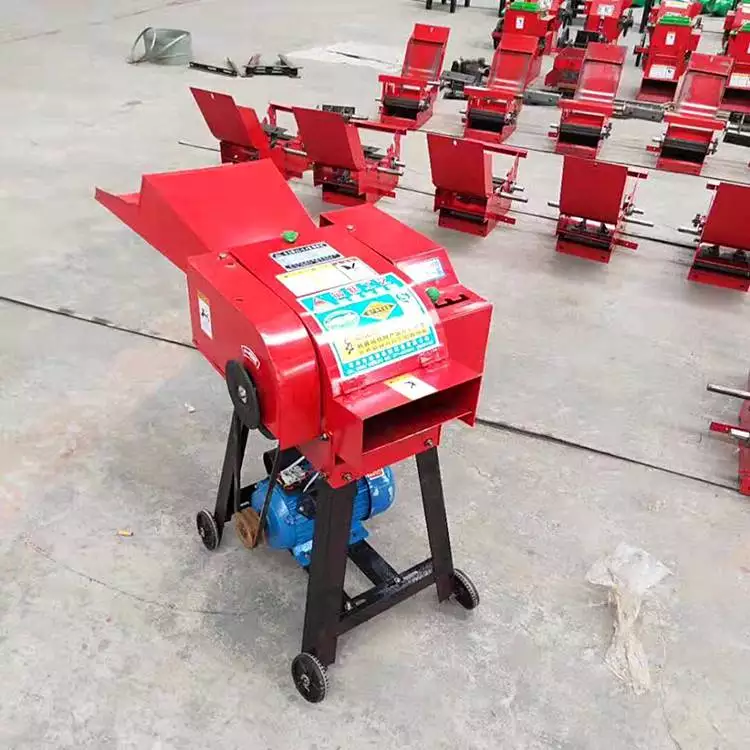
![图片[1]-Non-standard Hardware Processing-Dalian Fuhong Machinery Co., Ltd](/wp-content/uploads/2026/01/1768846137524_1.png)
The horizontal transportation path in the factory must be cleared in advance and all obstacles must be removed. The turning radius must be measured in advance for small batch orders of non-standard parts processing . Ground anchors can be installed in narrow passages and used with hand chain hoists for steering and traction. The transportation speed should be controlled within two meters per minute.
The rollers under the rows should be kept parallel, and the distance between them should be about fifty centimeters. In the forward direction, a dedicated person must continue to insert the roller bar without interruption, and the personnel at the rear must recover the roller bar in a timely manner. When the fan is placed on the row, it must be tightly tied with the inverted chain and the row frame to avoid sideways sliding.
On-site installation preparation
The foundation concrete can only be installed after it reaches 100% of the design strength. Before placing the pad iron group, the foundation surface must be chiseled into a pitted state and the floating dust must be removed. The number of horns in each group does not exceed four, and using pairs of inclined horns is more convenient for fine-tuning.
Use a frame level to measure the main shaft of the fan and the machined surface of the base. The level deviation should be less than 0.2 thousandths. After the initial alignment, for the secondary grouting of the anchor bolt holes, it is appropriate to use non-shrinkage high-strength grouting material, and the thickness of the grouting layer shall not be less than 50 mm.
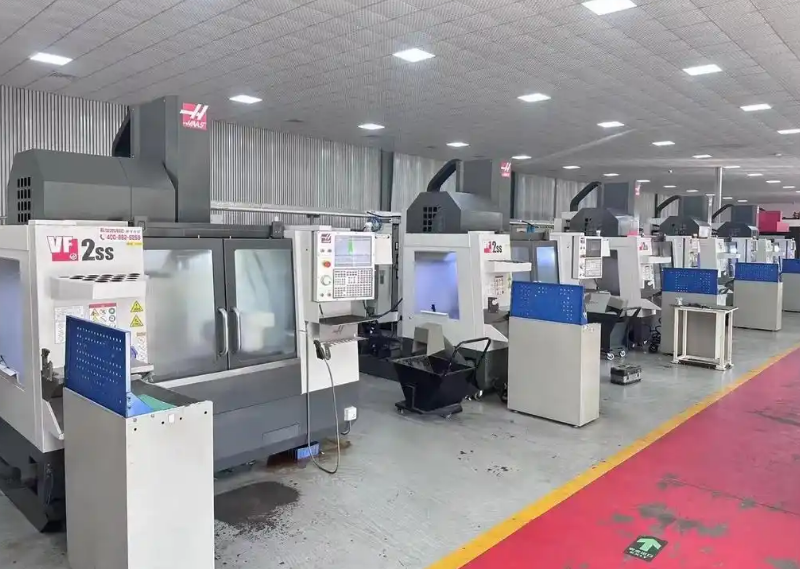
![图片[2]-Non-standard Hardware Processing-Dalian Fuhong Machinery Co., Ltd](/wp-content/uploads/2026/01/1768846137524_2.png)
The trial operation phase is after the installation is completed. During this period , non-standard parts are processed for small batch orders . Will you pay more attention to vibration data monitoring or the bearing temperature change curve? Welcome to share your experience points in the comment area.



暂无评论内容