


Ship field intelligent robot welding process and application strategy
Nowadays, in outdoor working sites of shipbuilding, intelligent welding robots are gradually replacing some traditional manual labor. The efficiency improvement and quality stability it brings have attracted people's attention. However, practical application also faces many difficult challenges.
The core advantages of intelligent welding robots
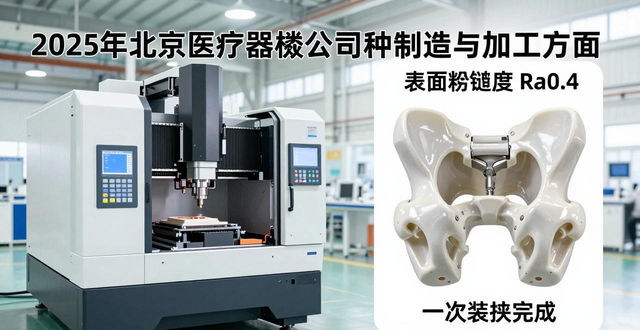
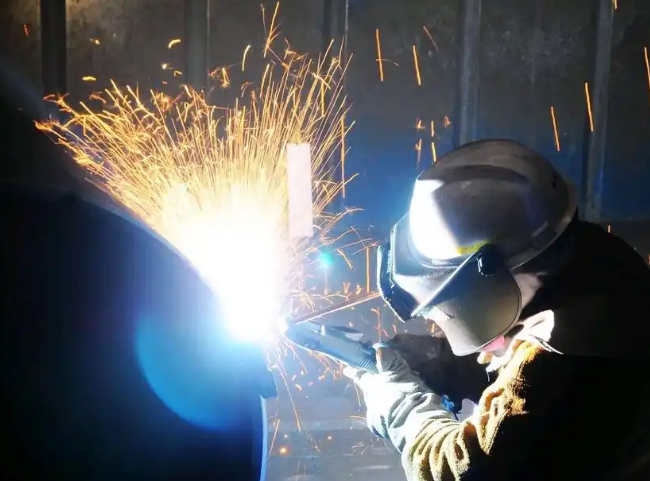
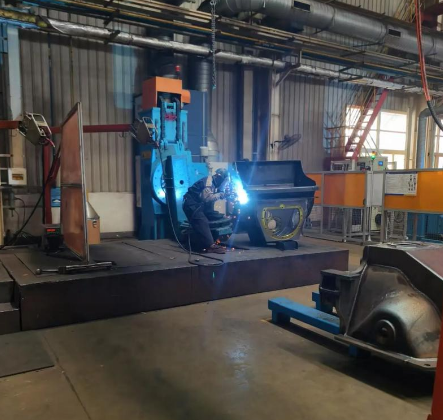
The main advantages of intelligent welding robots in the field of ships are stability and sustainability. It can maintain set welding parameters for a long time in complex outdoor environments without being disturbed by personnel fatigue and emotional fluctuations. For high-strength marine steel such as EH36, the robot can ensure that key indicators such as weld penetration and width are highly consistent.
![图片[1]-Ship Field Intelligent Robot Welding Process And Application Strategy-Dalian Fuhong Machinery Co., Ltd](/wp-content/uploads/2026/01/1768766613283_1.jpg)
Another obvious advantage is that it can improve the safety of the operation. Offsite construction often involves dangerous locations such as high altitudes and small spaces. Robots can replace manual labor in entering these areas, thereby reducing the risk of work-related injuries. At the same time, it can also adapt to some harsh weather conditions, thereby reducing shutdowns caused by environmental factors, thereby ensuring the overall progress of the project.
Special Challenges for Field Applications
![图片[2]-Ship Field Intelligent Robot Welding Process And Application Strategy-Dalian Fuhong Machinery Co., Ltd](/wp-content/uploads/2026/01/1768766613283_2.png)
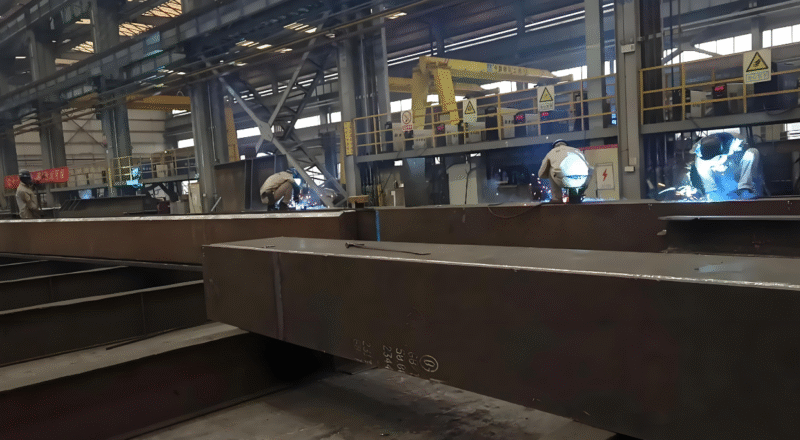
The ship's field environment is very different from that of the factory workshop, and this situation is the first challenge. There is often wind on site, the humidity will change, the temperature will fluctuate, and the working surface is uneven. These will cause interference to the robot's sensing system and the stability of the welding arc. For this, the robot must be equipped with additional protection and compensation systems.
The workpiece is in a complex state, and the assembly gaps and misalignments of hull segments or components that need to be welded in the field may not be exactly the same. This sets higher requirements for the robot's path planning and real-time correction capabilities. How to improve the automation rate of hull riveting welding (robots) . This requirement requires that the early stage assessment work of the process must be sufficient, and multiple response plans must be preset.
Key Qualification Steps for Welding Processes
Before application, rigorous and solemn welding process evaluation must be carried out. This includes, it seems, conducting robotic welding tests on EH36 steel under simulated field conditions, and also testing the mechanical properties of the welds, such as tensile strength and impact toughness, to see whether they can meet the requirements of ship regulations.
Another focus of the assessment is to determine the process parameter window. It is necessary to find out the current, voltage, welding speed and other parameter ranges suitable for the current brand of robots, specific welding materials and shielding gases. It is also necessary to clarify how to adjust these parameters when environmental factors change, thereby forming a reliable process database.
Precise control strategy for weld quality
Ensuring joint cleanliness and assembly accuracy are the first things to be achieved in quality control. Even if an intelligent robot is used, if there is a lot of rust, oil or moisture in the area to be welded, or the groove size exceeds the tolerance range, it will be extremely difficult to weld a weld that meets the standards. Therefore, the preliminary preparation work must be standardized.
During welding, real-time monitoring must be implemented with the help of a robot sensing system, laser vision or arc sensing is used to track the weld trajectory, and molten pool monitoring technology is also used to monitor the forming status. If a deviation is detected, the system must be able to automatically fine-tune the parameters or alarm, and allow manual inspection.
![图片[3]-Ship Field Intelligent Robot Welding Process And Application Strategy-Dalian Fuhong Machinery Co., Ltd](/wp-content/uploads/2026/01/1768766613283_3.png)
Typical application scenarios and operating procedures
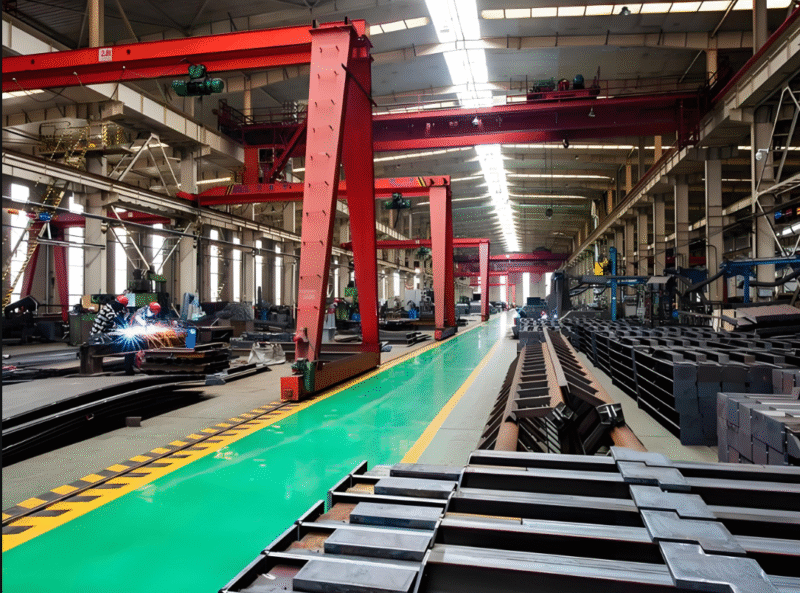
A typical scenario involves the welding of large seams on plane segments of the hull. The robot is generally installed on a moving track or platform and performs welding along a preset path. The operation process starts with the import of the 3D model and offline programming, and then carries out precise calibration on site to ensure that the program path matches the actual workpiece position.
Flexible rails or robotic arm robots may be used on curved surfaces or special locations, such as side panels. The operator must make final adjustments to the program based on data obtained from on-site measurements. During welding, one operator can monitor multiple pieces of equipment at the same time, and his main responsibility is to be responsible for loading and unloading materials and emergency response.
Maintenance and personnel skill requirements
The maintenance of robots responsible for field operations is extremely critical and of great significance. Its mechanical structural tightness needs to be checked every day, and the guide rails and welding gun nozzles must be cleaned. And the sensor should be calibrated regularly and the software should be updated at the same time. In view of the large amount of dust in the environment, the filters of electrical cabinets and cooling systems need to be cleaned or replaced more frequently.
The application of intelligent robots has not only not reduced the requirements for people, but has actually changed the demand for skills. For on-site personnel, they must master the corresponding basics of robot programming, as well as the adjustment of process parameters, the welding process and application strategies of intelligent robots in shipboard outfields, and knowledge of fault diagnosis and other aspects. As for how enterprises can improve the automation rate of hull riveting welding (robots) , they need to cultivate composite skilled workers who are not only proficient in welding technology but also familiar with automation equipment.
Have you ever observed the actual operation of this intelligent welding robot on a ship or at a heavy engineering site? What is the biggest change it brings? You are welcome to share your personal opinions in the comment area. If you feel that this article is helpful to you, please give it a like and support it.



暂无评论内容