

Special materials brazed under pressureforce containerthe pivotal role in
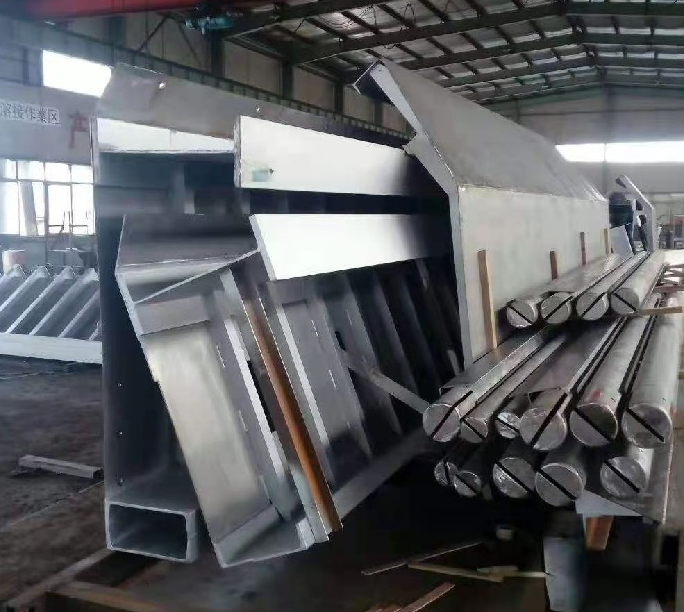
Pressure vessels, as core equipment in sectors such as energy, chemical engineering, and aerospace, have safety and reliability that directly impact production safety and environmental protection. As industrial demands evolve towards extreme environments involving high temperatures, pressures, and corrosion resistance, the limitations of traditional materials become increasingly apparent. Consequently, riveting and welding processing technologies for specialised materials—such as high-strength steels, stainless steels, nickel-based alloys, and titanium alloys—have become critical components in pressure vessel manufacturing. This paper will provide an in-depth analysis of the technical requirements, process challenges, and industry applications of riveting and welding specialised materials, offering professional guidance for relevant practitioners.![图片[1]-压力容器制造中的特种材料铆焊加工技术要求-大连富泓机械有限公司](https://cndlfh.com/wp-content/uploads/2025/12/QQ20251230-184951.png)
Part One: Properties of Common Specialty Materials and Welding Challenges
High-strength low-alloy steel (HSLA)
Characteristics: High yield strength, good toughness, but prone to cold cracking during welding.
Technical requirements: Strictly control the preheating temperature (typically 150–250°C), employ low-hydrogen welding consumables, and perform post-weld de-hydrogenation treatment.
Austenitic stainless steel (such as 304, 316L)
Characteristics: High corrosion resistance, but prone to hot cracking and intergranular corrosion during welding.
Technical requirements: Utilise ultra-low carbon welding consumables, control interpass temperature (<150°C), and employ argon arc welding shielding gas.
Nickel-based alloys (such as Inconel 625)
Properties: Resistant to high-temperature oxidation and stress corrosion, but prone to hot cracking and porosity during welding.
Technical requirements: Thoroughly clean the grooves, use compatible welding consumables, and control heat input.
Titanium and titanium alloys
Characteristics: High strength-to-weight ratio, corrosion-resistant, but welding is susceptible to oxygen and nitrogen contamination.
Technical requirements: Full inert gas shielding (back shielding), high-purity argon gas, thorough pre-welding cleaning.
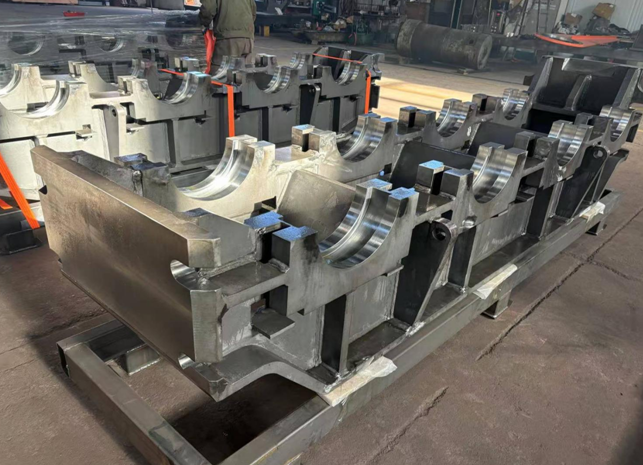
Part Two: Core Technical Requirements for Riveting and Welding of Special Materials![图片[2]-压力容器制造中的特种材料铆焊加工技术要求-大连富泓机械有限公司](https://cndlfh.com/wp-content/uploads/2025/12/QQ20251230-185010.png)
Process Evaluation and Standard Compliance
Must comply with industry standards such as ASME Section VIII and GB150.
Welding procedure qualification (WPS/PQR) must cover all material thicknesses and joint configurations.
Welding method selection
Gas Tungsten Arc Welding (GTAW/TIG): Suitable for thin-walled and precision components.
Gas Metal Arc Welding (GMAW/MIG): Suitable for efficient welding of medium to thick plates.
Submerged arc welding (SAW): Suitable for longitudinal and circumferential welds on thick-walled vessels.
Heat Treatment Control
Preheating and post-heating: Prevent cold cracks and improve residual stress distribution.
Solution treatment: Used to restore the corrosion resistance of austenitic stainless steel.
Stress relief annealing: Reduces residual welding stresses and enhances dimensional stability.
Non-Destructive Testing (NDT) Requirements
Radiographic Testing (RT): Detection of internal defects such as porosity and lack of fusion.
Ultrasonic Testing (UT): Suitable for detecting cracks in thick-walled vessels.
Penetrant Testing (PT) and Magnetic Particle Testing (MT): Employed for the detection of surface defects.
Part Three: Industry Application Cases and Trends
Chemical reaction vessel
Case Study: A polymerisation reactor lined with Hastelloy C-276 achieved corrosion-resistant layer welding through strip-welding technology.
Nuclear power plant pressure vessel
Case Study: Thick-walled welding of SA508 Gr.3 steel utilising narrow-gap submerged arc welding to enhance efficiency and minimise distortion.
Trend Development
Intelligent welding system: Integrated sensors monitor welding parameters in real time.
Applications of Composite Materials: Plasma Cladding Technology for Metal-Ceramic Composite Coatings.
Green Manufacturing: Application of low-fume welding consumables and high-efficiency welding power sources.
reach a verdict
The riveting and welding techniques for specialised materials in pressure vessel manufacturing demand exceptionally high standards, encompassing multidisciplinary fields such as materials science, process engineering, and quality control. Enterprises must establish comprehensive welding management systems, commit to sustained research and development investment, and cultivate highly skilled technical teams to maintain competitive advantage in high-end manufacturing.


暂无评论内容